
We create digital solutions that work for businesses
“How much does Google advertising cost?” is one of the first questions businesses ask before launching a campaign. However, Google Ads does not have a single price per click or a universal monthly fee. Two websites with the same advertising budget can generate completely different numbers of leads because results are affected by competition, campaign settings, offer quality, website speed, and landing-page usability.
In 2026, automation in Google Ads has become even more prominent. Performance Max uses Google’s entire advertising inventory, while AI Max for Search campaigns can expand reach beyond a standard keyword list. But automation does not eliminate strategy. If a business does not provide the system with accurate conversion data, the algorithm optimizes for incomplete or incorrect signals rather than sales.
In this article, the BB STUDIO team explains what makes up the cost of Google Ads, how to calculate a starting budget, and what needs to be prepared before launch so that you pay not simply for traffic, but for potential customers.
The total advertising cost consists of at least three parts:
Advertising budget — money Google charges for clicks, impressions, or other interactions depending on the campaign type.
Setup and management — the work of a specialist or team: demand research, campaign structure, ads, analytics, optimization, and reporting.
Website and creative preparation — landing pages, banner design, product feed, technical tracking setup, and conversion-rate improvements.
Therefore, the question “How much does Google Ads cost?” is more accurately phrased as: how much can a business afford to pay for a qualified lead or sale while keeping advertising profitable?
Google Ads works on an advertising auction model. The cost per click is not fixed: it changes depending on the query, location, time, device, competition, and the predicted usefulness of the ad to the user.
In areas with a high customer acquisition value — for example, complex B2B services, real estate, or legal services — advertisers are generally willing to pay more per click. In a narrow local niche, competition may be lower, but search volume will also be smaller.
The cost and amount of available traffic differ for the whole of Ukraine, an individual region, a city, or a small radius. A local company should not automatically advertise across the entire country if it physically serves only one region.
The query “what is contextual advertising?” has informational intent, while “order Google Ads setup” has commercial intent. The second query is closer to a purchase, so competition for it is often higher. The specialist’s task is to group queries by intent and avoid mixing different funnel stages into one unmanageable campaign.
Google uses Quality Score as a diagnostic tool. It is influenced by expected click-through rate, ad relevance, and landing-page experience. Quality Score itself is not a direct price-reduction button, but low relevance often signals that the “query — ad — page” combination needs improvement.
Search campaigns capture existing demand through users’ search queries.
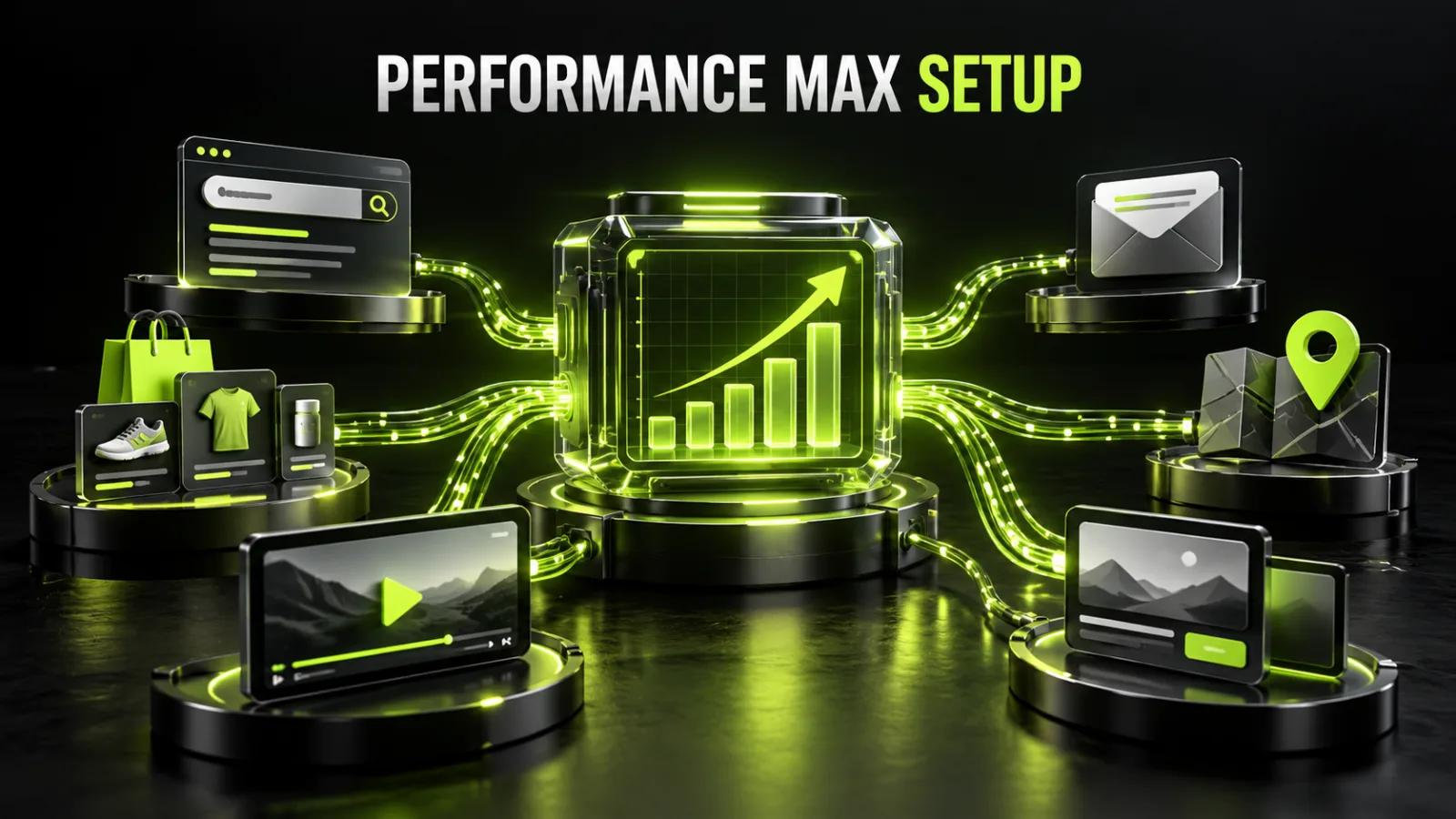
Performance Max works across Google channels, including Search, YouTube, Display, Discover, Gmail, and Maps.
Shopping campaigns use product data and are especially important for e-commerce.
Video and Display campaigns help create demand, bring visitors back, and expand reach.
There is no campaign type that is automatically best for everyone. The choice depends on the business model, demand, number of conversions, data quality, and advertising objective.
It is better to build the starting budget around business economics rather than an amount that is simply “okay to test.”
For a service business, this may be a qualified lead or phone call. For an online store, it may be a paid purchase or an order with a confirmed margin. A page view or button click is not always a full business conversion.
Basic formula:
Acceptable CPA = profit from one customer × share of profit the business is willing to allocate to acquisition.
For example, if the gross profit from a new customer is UAH 8,000 and 25% can be spent on acquisition, the target customer acquisition cost is UAH 2,000. But if only one in four leads becomes a customer, the acceptable cost per lead will be around UAH 500.
Estimated monthly media budget = target CPA × desired number of conversions.
If a business wants to generate 40 qualified leads at an acceptable cost of UAH 500, the basic advertising budget benchmark would be UAH 20,000. This is not a guarantee of results, but a hypothesis that should be tested against demand forecasts, historical data, and an actual campaign test.
Even a large budget cannot create the required number of searches in a very narrow niche. Conversely, a budget that is too small in a competitive field may not generate enough data for meaningful conclusions. Before launch, assess keywords, seasonality, geography, and estimated clicks.
In Google Ads, advertisers set an average daily budget for a campaign. On some days, the system may spend more than the average when it predicts stronger demand, and less on other days. Therefore, you should monitor not only a single day but also spending rules and monthly limits described in Google’s documentation.
For approximate planning, the monthly budget is often converted into an average daily budget:
Average daily budget ≈ monthly budget ÷ 30.4.
If UAH 30,400 is allocated for media placement per month, the average daily budget will be about UAH 1,000. However, dividing this amount equally between all campaigns is not always correct: priority should go to the direction that generates more valuable or cheaper conversions.
Without proper conversion tracking, a business does not know which campaigns, ads, and keywords generate results. Google also does not receive reliable signals for automated bidding strategies. Before launch, check Google Analytics 4, Google Tag Manager, conversion actions, purchase-value tracking, calls, and, when necessary, offline sales imports from the CRM.
Advertising can bring a qualified user, but it cannot compensate for an unclear offer, a slow website, a poor mobile experience, or a form that does not work. Sometimes improving the page reduces the cost per lead more effectively than endlessly adjusting bids.
Performance Max, Video, and Display campaigns require high-quality headlines, descriptions, images, and videos. For an online store, accurate product data, names, categories, prices, availability, and correct Merchant Center operation are critical.
After launch, a campaign does not simply enter a “works forever” mode. Search terms, negative keywords, budgets, conversion value, audience segments, geography, devices, and website changes need to be analyzed regularly.
Suitable when there is clear existing demand and you need to manage thematic query groups, ads, and landing pages. It is a reliable foundation for services where users are already looking for a provider or solution.
Google positions Performance Max as a goal-based campaign that provides access to Google’s entire advertising inventory from a single campaign and complements Search campaigns. The format can be strong for e-commerce and projects with enough high-quality data, creatives, and clearly defined conversion value.
AI Max can expand query matching, use website content and assets for more relevant reach, and optimize final URLs. Before enabling it, check the website structure, pages, brand controls, and conversion data. More automation means the quality of input data becomes even more important.
For many businesses, the optimal solution is not choosing one tool, but using a controlled combination: a Search campaign for existing demand, Performance Max for scaling, and remarketing to bring interested users back.
Real conversions are not configured. The system optimizes for secondary actions or receives no signals at all.
Targeting is too broad. The campaign is shown for irrelevant queries, in unnecessary regions, or to the wrong audience.
Search terms are not being managed. Negative keywords and new relevant queries are not added regularly.
All services lead to the homepage. The user does not see an answer specifically relevant to their query.
The offer is weak. The ad promises the same thing as competitors without a specific advantage or proof.
The mobile version is slow or inconvenient. People leave the website before submitting the form.
Automation was enabled without quality data. The algorithm scales the wrong result for the business.
Only CPC is evaluated. A cheap click does not always bring a customer, while a more expensive query may have better conversion and value.
separate campaigns by services, regions, and user intent;
connect each query group to a relevant landing page;
review search terms and exclude irrelevant ones;
send Google Ads not all leads equally, but qualified leads and real sales;
speed up the website and reduce unnecessary steps before submitting a lead;
test offers, headlines, forms, and calls to action;
analyze CPA, ROAS, and profit rather than only clicks and CTR;
avoid changing dozens of parameters at once so that you can understand the cause of the result
Yes. Technically, the advertising account is available to any business. A self-managed launch can make sense for a small test if the owner understands the product economics, can set up analytics, and is ready to analyze the campaign regularly.
Professional management is especially worthwhile if:
the business has several services, regions, or language versions;
the online store has a large assortment and Merchant Center;
advertising is already spending budget, but the source of sales is unclear;
offline conversions or CRM data need to be imported;
Performance Max scaling is planned;
the website needs dedicated landing pages or technical improvements.
Use this short checklist:
the campaign’s business objective is clearly defined;
an acceptable cost per lead or ROAS has been determined;
priority services or product categories have been selected;
the website works quickly on smartphones;
the page contains a clear offer, price or terms, proof, and CTA;
Google Analytics 4, Google Tag Manager, and conversions are configured;
calls and forms have been tested;
ads, images, and videos are prepared;
for an online store, the feed and Merchant Center have been checked;
it is clear who handles leads and how they are processed.
The cost of Google Ads in 2026 is not determined by a single rate. It is affected simultaneously by the auction, competition, campaign type, data quality, ads, website, and the business’s ability to turn inquiries into sales.
The right starting point is not the “minimum budget,” but the acceptable customer acquisition cost. After that, you can assess demand, build the campaign structure, configure conversions, and launch a controlled test.
BB STUDIO combines website development, landing pages, analytics, and promotion. This makes it possible to work not only with the advertising account, but with the entire user journey — from search query to lead.
Need to understand what budget makes sense specifically for your business? Contact BB STUDIO: we’ll check your website, analytics, and advertising potential and prepare a Google Ads launch plan.
 E-commerce
 Google Ads
 Web development
 Web development
 Let’s create something amazing together
