We create digital solutions that work for businesses
A company may receive dozens of enquiries and still have no clear answer to why sales are low. Marketing reports lead volume, salespeople talk about prospects who are “thinking,” and the owner sees a total at the end of the month. Without shared rules, no one knows where revenue is lost: targeting, response time, qualification, the proposal, or the missing follow-up.
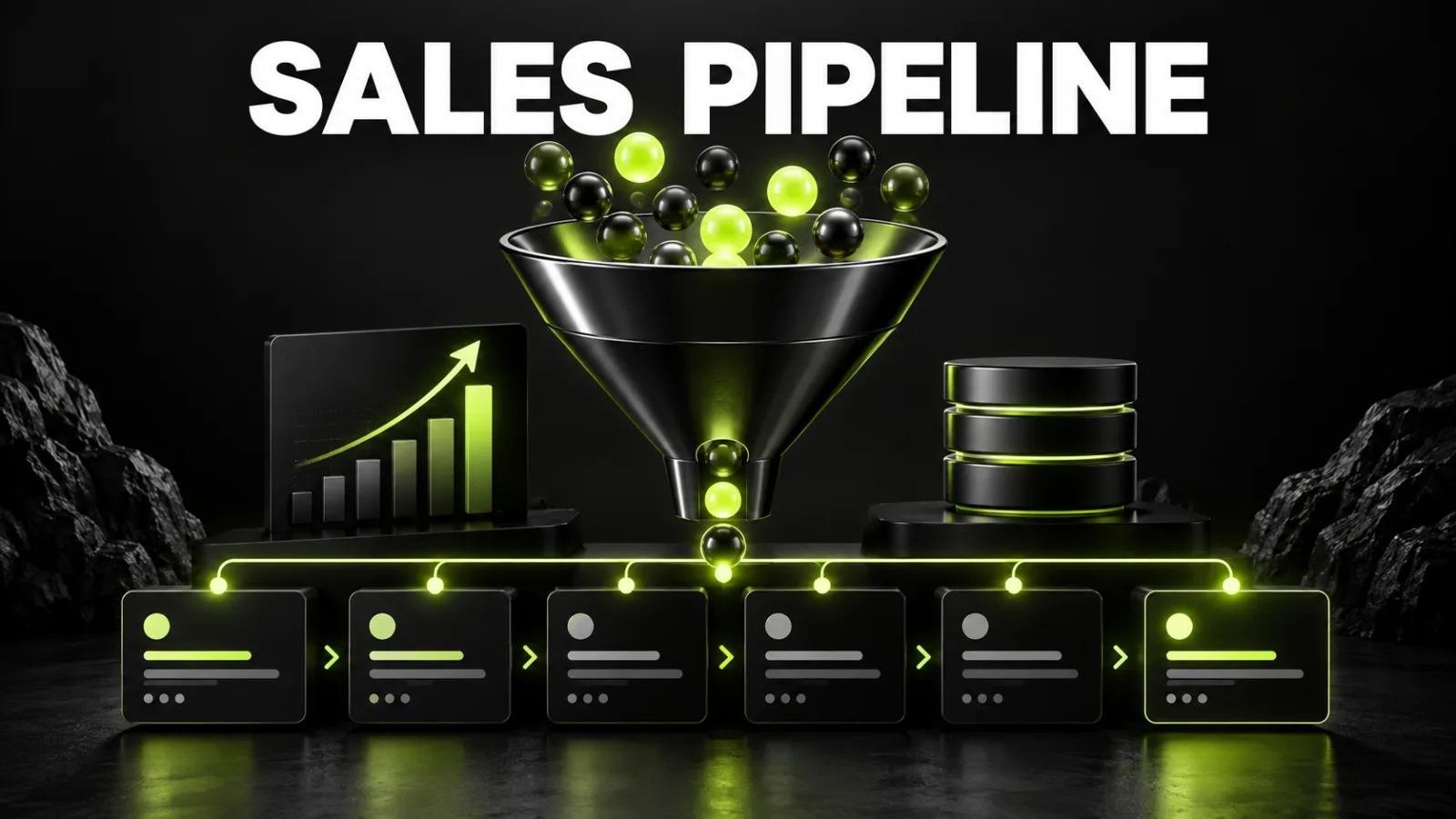
A sales funnel turns the journey into measurable steps. It shows how many potential buyers enter, how they progress, where they stall, and what share becomes customers. In CRM, this model becomes an operational pipeline: every opportunity has a stage, owner, value, next action, and history.
A sales funnel is a model of how potential customers move from first awareness to a valuable outcome. Its narrowing shape represents attrition: not every impression becomes a visit, not every visit becomes an enquiry, not every enquiry is qualified, and not every proposal becomes a purchase.
A broad marketing funnel may include:
awareness;
interest;
consideration;
enquiry;
commitment;
purchase;
retention or advocacy.
This model is useful for strategy, but it is not specific enough for daily sales work. “Interested” and “considering” are often subjective. CRM stages should represent verifiable events: enquiry received, contact completed, needs qualified, meeting held, proposal delivered, terms approved, and payment received.
The terms overlap but answer different questions.
| Model | Main question | Example |
|---|---|---|
| Marketing funnel | how many people move from reach to conversion? | impression → visit → enquiry → purchase |
| Sales pipeline | where is each opportunity in the operating process? | new → qualified → proposal → payment |
| Customer journey | what does the buyer see, think, and do across touchpoints? | search → website → consultation → purchase → support |
| Sales forecast | how much revenue is likely in a period? | value adjusted for timing and probability |
The funnel aggregates volume and conversion. The pipeline manages individual deals. The customer journey explains experience. A business benefits from all three, but a CRM should not create a stage for every marketing interaction.
Stages depend on the buying model. An urgent consumer service may close during one call. A B2B project may require months, several stakeholders, a demonstration, technical review, budget approval, and contracting. Ecommerce has checkout, payment, fulfilment, shipping, and returns.
One company may also run several processes:
new and repeat customers;
standard services and custom projects;
inbound and outbound sales;
sales and support;
retail and partner orders.
Combining different motions in one pipeline creates ambiguous stages, meaningless cycle times, and weak forecasting. Separate pipelines are justified when the processes have different milestones, owners, or outcomes.
The outcome might be confirmed payment, a signed order, a completed booking, or another event with business value. “The buyer is interested” is not a final outcome.
Review the last 30–50 enquiries. Record source, first-response time, interactions, proposal, value, outcome, and loss reason. Do not design the process from one salesperson’s memory.
Write down what happens today, not what an ideal policy says should happen. Mark manual handoffs, waiting, duplicate entry, and points where no next action exists.
Marketing generates attention, visits, calls, forms, and messages. Sales begins when the company receives an identifiable intent and can take an action. The guide to getting customers for a small business covers acquisition channels; this guide manages demand after it arrives.
Every stage needs five components:
A fact-based name. “Needs qualified” is better than “Warm prospect.”
Entry criteria. What must be true before a deal enters.
Required action. What the team does next.
Exit criteria. What allows the deal to advance.
Time limit. How long it can remain without meaningful activity.
Take “Proposal delivered.” Entry requires a tailored proposal sent through an agreed channel. The required action is to schedule a follow-up. Exit requires substantive buyer feedback or an agreed next step. Without a date, the opportunity has no controlled continuation.
A useful test is consistency: two salespeople should assign the same stage when given the same evidence. If they disagree, the definition is incomplete.
For many small teams, five to eight active stages plus Won and Lost are enough. Too few stages hide bottlenecks. Too many create administrative work and false precision.
Do not create stages for:
actions that occur within one milestone;
customer attributes;
deal priority;
reasons for a pause;
salesperson tasks;
documents that do not change buyer commitment.
Use fields, tags, tasks, and checklists for these. A stage must represent a change in deal state.
| Stage | Entry criterion | Next action | Metric |
|---|---|---|---|
| New enquiry | valid contact created | first response | response time |
| Contact made | two-way conversation occurred | discover the need | contact rate |
| Qualified | need, fit, and timing confirmed | prepare the solution | qualified lead rate |
| Consultation held | requirements and decision criteria discussed | build proposal | meeting-to-proposal rate |
| Proposal delivered | buyer received the document or quote | schedule follow-up | response time |
| Terms discussed | specific feedback exists | resolve obstacles | proposal-to-agreement rate |
| Awaiting payment | decision made and invoice issued | confirm payment | agreement-to-payment rate |
| Won | payment confirmed | hand over to delivery | revenue and cycle time |
| Lost | no sale in the current cycle | record the reason | loss distribution |
When a website has several forms, each should transfer context: page, service, language, UTM parameters, and a stable enquiry ID. This belongs in the scope of website development or improvement rather than manual cleanup after every submission.
A B2B pipeline is often longer. It should distinguish seller activity from verified buyer progress.
| Stage | Buyer-side evidence |
|---|---|
| Target account | company matches the ideal customer profile |
| Discovery scheduled | relevant person has agreed to a meeting |
| Need confirmed | problem, impact, timing, and stakeholders are known |
| Solution reviewed | key participants have seen a relevant use case |
| Business case | value, budget, and risks are under discussion |
| Proposal submitted | buyer confirms that formal review has started |
| Legal or technical review | materials are with the responsible team |
| Decision made | buyer confirms selection |
| Won or lost | final result recorded |
Do not advance an opportunity because a salesperson sent an email. Require a buyer action or confirmation. This removes “nearly ready” deals that inflate the forecast for months.
Ecommerce should separate anonymous website behavior from operational order status.
The marketing sequence may include:
product view;
add to cart;
begin checkout;
shipping and payment selection;
confirmed purchase.
The order flow may include:
new order;
confirmed;
awaiting payment;
picking and packing;
handed to carrier;
delivered;
cancelled or returned.
Do not create a CRM opportunity for every product view. Web analytics handles anonymous behavior, while CRM or order management works with identifiable customers and orders. Idempotency, duplicate controls, and payment/shipping status synchronization are essential.
Not every enquiry belongs in the active sales pipeline. Define disqualification rules:
the product cannot solve the need;
geography or customer type is unsupported;
contact details are invalid;
the submission is spam;
budget or timing is fundamentally incompatible;
the message concerns partnership, employment, or support.
A delayed decision is not necessarily lost. When a real prospect plans to return later, move it into a nurture process with a reason and an exact follow-up date. Leaving it active distorts cycle time and forecasting.
Conversion between adjacent stages:
Stage conversion = deals that advanced / deals that entered the stage × 100%
Overall win rate:
Win rate = won deals / relevant new opportunities × 100%
Use a cohort or a sufficiently mature time window. Comparing leads created this week with sales closed this week is misleading when the average cycle is two months. New leads have not finished, while current revenue originated from older cohorts.
| Metric | What it reveals |
|---|---|
| New enquiries | incoming volume |
| Qualified lead rate | traffic quality versus sales performance |
| First-response time | delay at the start |
| Stage conversion | process bottlenecks |
| Win rate | share of relevant opportunities won |
| Average deal value | revenue potential per win |
| Sales-cycle length | movement speed |
| Time in stage | stalled opportunities |
| Loss reasons | product and process issues |
| Revenue by source | financial value of marketing channels |
| Repeat sales | value after the first purchase |
Do not evaluate a salesperson only by total conversion. Lead quality, segment, price, seasonality, inventory, and market difficulty also affect outcomes. Compare similar groups and inspect individual transitions.
Start with the largest abnormal drop, but investigate the underlying records.
A low contact rate can indicate invalid numbers, slow response, the wrong channel, or poor source quality. Weak qualification can reflect broad targeting, an unclear offer, or a form that invites the wrong request. A large proposal drop can signal misaligned expectations, weak value communication, delay, a confusing document, or price mismatch.
If website traffic is high but enquiries are scarce, the bottleneck occurs before the sales pipeline. Review the guide to why website traffic does not generate leads for offer, page, form, trust, mobile UX, and tracking issues.
Automation should enforce a proven rule, not conceal a broken process.
create the contact and opportunity;
check for duplicates;
preserve source and UTM parameters;
assign an owner;
create a first-response task;
confirm receipt to the buyer.
display a question checklist;
require critical fields;
adjust priority by rules;
route unsupported enquiries to the correct process.
generate a document from deal data;
record the send date;
create a follow-up;
warn when no response arrives;
preserve proposal versions.
create an invoice;
notify the owner about payment;
hand over won work;
create a project or order;
start onboarding.
require a standardized reason;
stop active sales reminders;
move relevant contacts to nurture;
update advertising audiences only under appropriate consent and privacy rules.
Customer-facing automation must respect consent, language, timing, and channel. Internal controls can be strict: an active deal without an owner or next action should appear in an exception report immediately.
A source value of “internet” is not enough. Transfer:
source, medium, and campaign;
landing page;
conversion page;
form type;
product or service;
language and region;
stable enquiry ID;
exact timestamp;
permitted advertising click identifiers.
Web analytics should record a successful form only after server confirmation, not a button click. The Google Analytics 4 setup guide explains event and conversion tracking.
For Google Ads management, distinguish a raw lead, a qualified lead, and a sale. Where technical, legal, and platform conditions permit, later CRM outcomes can return as offline conversions. For search engine optimization, connect revenue not only to Organic but to the landing page or content cluster that initiated the opportunity.
Create one pipeline for one sales motion.
Add five to eight stages named after completed facts.
Define entry and exit criteria.
Require only fields that affect action or reporting.
Configure roles and permissions.
Add tasks and overdue controls.
Standardize loss reasons.
Connect one source and test the full cycle.
Import only clean, active opportunities.
Train the team with real scenarios.
Start a weekly pipeline review.
Change structure only after evidence accumulates.
Do not treat stage name as a precise close probability. You may begin with cautious defaults, but replace them with actual conversion data by segment and opportunity type.
A weekly review should make decisions, not read every record aloud. For each meaningful active opportunity, ask:
does it meet the current stage criteria?
what was the latest buyer action?
what is the next step and date?
who is involved in the decision?
what could stop the purchase?
are value and timing realistic?
should the deal advance, move back, enter nurture, or close?
Review inactive opportunities, excessive time in stage, overdue tasks, and unusual accumulation in one column. A large pipeline is not healthy if most deals lack a buyer-confirmed next step.
A simple weighted forecast uses:
Weighted revenue = opportunity value × win probability
The total is an estimate, not a guarantee. It becomes useful only when stages are accurate, probability is grounded in historical data, and expected close dates are maintained.
Management can use three views:
Committed: conditions are confirmed and closure is close;
Best case: realistic opportunities that still require meaningful steps;
Pipeline: all qualified active opportunities.
Compare forecast with actual revenue and record reasons for the difference. The broader investment logic follows similar principles to calculating website ROI.
A template cannot know your product, buying cycle, or buyer actions. Use examples only as a draft.
Sending an email does not prove commitment. Require a buyer outcome or an agreed next action.
Spam, unsupported leads, and delayed decisions inflate the pipeline. Use clear outcomes and a nurture process.
“Not interested” provides little insight. Use a short controlled list and a comment for context.
People start entering arbitrary values. Require only information needed for an action, transition, or report.
Sales, support, delivery, and repeat orders may connect, but they do not always belong in one pipeline.
A form or API change can silently stop lead creation. Use logs, alerts, and scheduled test submissions.
Gather records, interview the team, reconstruct recent deals, and select one process for the pilot.
Define stages, criteria, fields, loss reasons, roles, and metrics. Test the model against ten real opportunities.
Configure the pipeline, tasks, one website form, duplicate rules, source tracking, and test analytics.
Train the team, run the first review, resolve ambiguous rules, and record baseline metrics. Do not attempt to automate every exception in one month.
one pipeline represents one process;
the final outcome has business value;
stages represent verifiable facts;
entry and exit criteria are documented;
every active deal has a next action;
acceptable time in stage is defined;
unqualified enquiries do not pollute sales data;
delayed prospects have a return date;
loss reasons are standardized;
attribution data transfers automatically;
duplicate rules are active;
conversion uses a valid cohort or period;
the team runs regular reviews;
integrations produce error logs;
changes are based on evidence.
A sales pipeline is valuable not because it looks organized on a CRM board, but because it improves daily decisions. A strong model reflects the real state of the buyer, requires a next action, separates active selling from waiting, and produces trustworthy data.
Start with one process, a small number of stages, and objective criteria. Test the complete journey, connect the website and analytics, and automate only after the rules work. To design the lead-transfer and technical logic, discuss your sales pipeline and CRM integration with BB STUDIO.
 CRM and Business Automation
 E-commerce
 Analytics and Conversion
 Artificial Intelligence
 Let’s create something amazing together
