
We create digital solutions that work for businesses
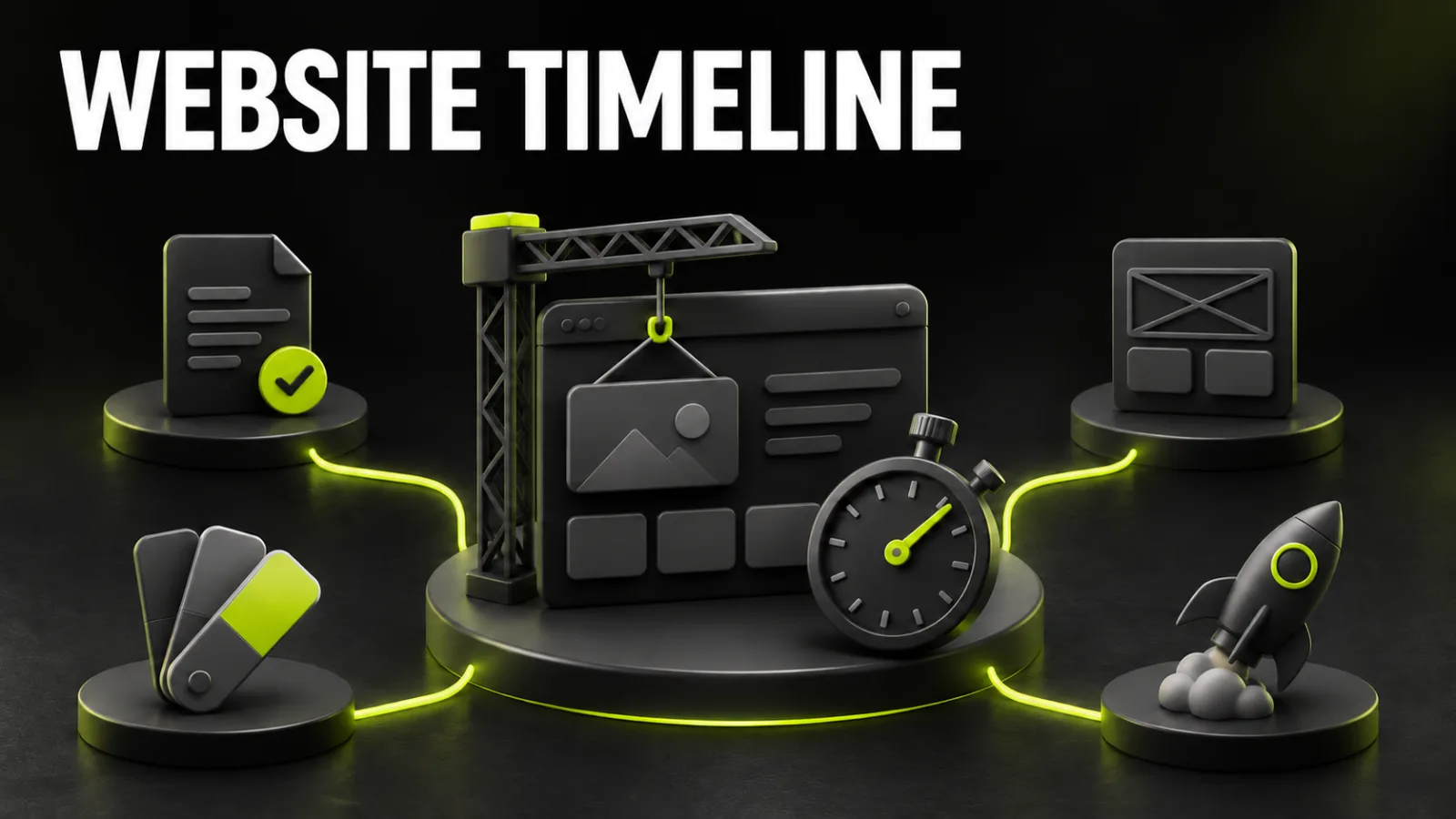
A landing page for one service can be completed in 5-10 working days. A corporate website often takes 2-4 weeks. An online store with a catalogue, payment, and delivery may need 3-8 weeks, while a custom digital service can run for several months.
These are planning ranges, not universal guarantees. The schedule depends on scope, content readiness, approval speed, languages, integrations, and changes introduced during the project.
If you have not selected the right format yet, compare a landing page and a multi-page website. Choosing the wrong format can delay a launch more than development itself.
| Website type | Realistic range | Typical first release |
|---|---|---|
| Landing page | 5-10 working days | one page, form, responsive layout, basic content |
| Brochure website | 7-14 working days | several pages about the company, services, and contacts |
| Catalogue website | 2-4 weeks | categories, item pages, filters, enquiry flow |
| Corporate website | 2-5 weeks | services, cases, blog, team, several page templates |
| Online store | 3-8 weeks | catalogue, cart, checkout, payment, delivery, product import |
| Custom web service | from 6 weeks | accounts, roles, custom logic, and integrations |
An accurate estimate becomes possible after the structure and features are clear. “We will finish in one week” means little if nobody knows how many pages, languages, products, and approval rounds are included.
A single page with a prepared offer takes less time than a corporate website with twenty services. The number of pages is not the only factor. The number of unique templates matters more.
Ten service pages based on one template may take less time than three pages with completely different behaviour.
Copy, photos, video, logo files, company details, and current pricing often delay launch more than coding. Missing material must be created, reviewed, and entered.
The client does not need to write every line. A studio can prepare the structure and drafts. A responsible person inside the business still needs to verify facts, service names, terms, guarantees, and numbers.
Each language involves more than translation. Headline lengths, buttons, forms, menus, metadata, and every page need checking.
If the client provides translations, agree on delivery dates in advance. Launching one complete language and adding the others later can be faster than waiting for the full set.
A form sent to email takes less time than a connection to a CRM, phone system, stock database, accounting platform, or external booking service. The schedule depends on documentation, test access, and a contact person for the external service.
Even a simple connection can stall for days when nobody can issue a key or explain the data format.
If the team sends a design on Monday and receives comments the following Friday, the project becomes longer automatically. Conflicting feedback from several decision-makers has the same effect.
One responsible client contact and an agreed response time save days. Collect comments in one list instead of sending fragments throughout the week.
Adding a customer account, calculator, second payment model, or new service line changes the calendar. That is normal when both sides estimate the new work separately.
Problems start when a large extra feature is described as a “small change” and expected to fit the original deadline.
The broader guide on creating a business website from scratch covers the whole process. Here we focus on time.
The team clarifies the goal, audience, services, geography, competitors, target launch date, and planned traffic sources.
You do not need to know every button label yet. You do need to agree on the result: enquiry, purchase, booking, call, company presentation, or process automation.
The supplier maps the pages and the sequence of sections. A wireframe shows the content without final colours and effects.
This stage saves time later. Moving a section in a wireframe is easy. Rebuilding a finished page after development is slower and more expensive.
The team usually designs one key page first, often the homepage. Once the style is approved, it creates the remaining templates and mobile layouts.
Design delays often come from unclear feedback rather than visual complexity. “Make it feel more premium” gives little direction. Explain whether the issue is colour, scale, density, imagery, or the way the service is presented.
Approved layouts become working pages. The team connects forms, navigation, catalogue functions, content management, and agreed services.
This stage may take a few days for a landing page. A store with imports, filters, and payments needs a longer cycle.
Copy, images, products, case studies, and documents are added during development or after the templates are ready.
Large catalogues should be imported from a structured file rather than entered manually. For each service, prepare a title, short introduction, full description, price, image, and common questions.
The team checks pages, forms, buttons, checkout, mobile layouts, languages, and primary journeys. The client verifies facts, pricing, contact details, and the agreed scope.
Critical issues are fixed before launch. Small ideas for future development can move into a separate list so they do not block a ready first release.
The website is connected to the domain. Forms, analytics, and required policy pages are checked. The team then hands over access and a short operating guide.
The guide on ordering a business website explains what to verify before final acceptance.
A fast launch is possible when the business needs one simple page, the offer is already clear, the content is ready, and one person makes decisions.
A three-day website usually relies on a proven structure, a limited number of custom sections, and minimal integrations. It can be the right option for testing a service, supporting an event, or starting a campaign.
The short deadline itself is not the problem. The problem is a promise to include research, a unique structure, complex design, dozens of pages, ecommerce, CRM, and full content in the same three days. That usually hides a template result or pushes unfinished work beyond the payment date.
For a small presentation project, consider a brochure website.
Development has started, but nobody owns the content. A finished design waits for service names, prices, photos, and legal details.
Assign an owner, use a content table, and set a delivery date for every page.
The owner asks for a shorter section, the marketer adds two paragraphs, and a partner wants the first version back. The team spends time resolving contradictions instead of building the website.
The supplier should receive one consolidated list.
During the project, a calculator, blog, customer account, and another language are added. Each idea may be useful, but not every idea belongs in the first release.
Split the list into essentials and items that can wait until demand is proven.
The domain belongs to a former employee, hosting was purchased by an old supplier, and another specialist configured the CRM. Finding access can delay a finished website.
Check account ownership at kickoff, not on launch day.
A business spends months changing individual photos and phrases even though the website is ready to serve customers. Competitors launch campaigns and capture demand during that time.
The first version needs to be complete, honest, and functional. It does not need to contain every future idea.
Do not judge a supplier only by screenshots. Open the live projects in the BB STUDIO portfolio and check how they work.
This works when a campaign or event is already scheduled. The team creates one key page from ready content, adds the form and basic analytics, then releases additional pages in phase two.
Realistic range: 3-7 working days with fast approvals.
This suits most service companies. There is time for analysis, structure, custom design, copy, several service pages, cases, and testing.
Realistic range: 2-4 weeks.
This suits a store, portal, or business with complex processes. The project includes a catalogue, integrations, roles, data imports, several languages, and staged testing.
Realistic range: from 6 weeks. Large projects are easier to manage as several releases.
When comparing offers, consider more than the calendar. The guide freelancer or web studio helps compare responsibility, resources, and support.
Ask the supplier to split the project into stages. If the schedule has no time for structure, approvals, content, or testing, the final date is based on assumptions.
Check whether the estimate covers:
Current packages and budget references are available on the BB STUDIO pricing page. The team can set an accurate calendar after a short project description.
 Web development
 Web development
 Web development
 For business
 Let’s create something amazing together

