We create digital solutions that work for businesses
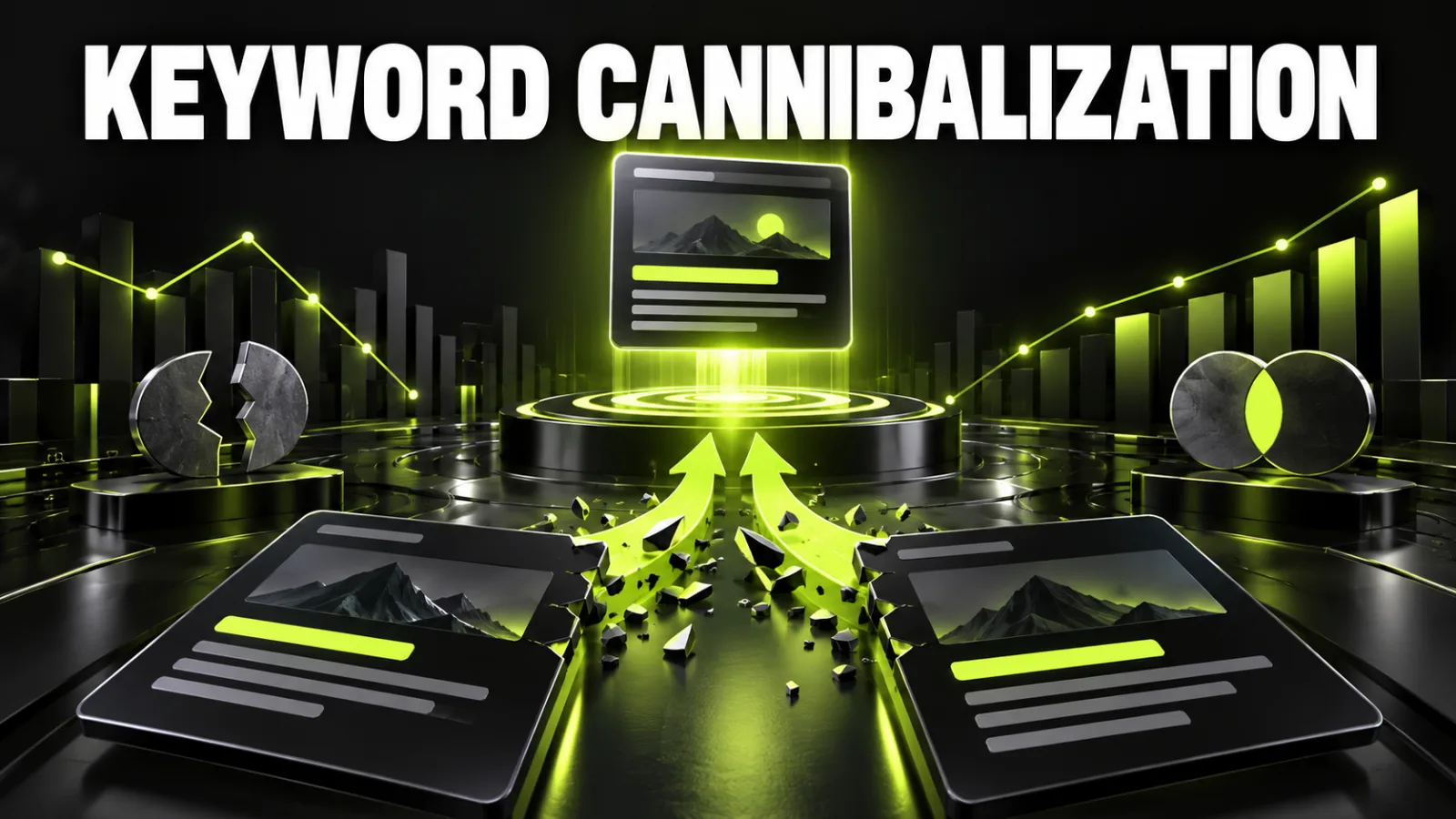
Keyword cannibalization happens when several pages on one website target the same search intent without a clear primary answer. Google may alternate the ranking URL, positions become unstable, signals are split, and the team does not know which page to improve.
However, two URLs receiving impressions for one query are not proof by themselves. A category, product page, service page, and guide can overlap in wording while serving different needs. A reliable diagnosis starts with intent, page type, SERP behaviour, and business outcomes rather than a simple keyword count.
This guide provides a practical workflow for service websites, blogs, and ecommerce projects: finding competing URLs, assessing risk, choosing the correct fix, and monitoring the outcome.
Cannibalization is a conflict in which two or more URLs answer almost the same user need and compete to become the site's representative page. The problem is not that both pages contain the same phrase. The problem is unclear architecture: search engines receive several similar candidates and inconsistent signals about which one matters most.
For example, a site may publish “SEO services,” “website SEO optimisation,” and “Google SEO promotion” as three landing pages. If they contain the same offer, similar titles, headings, sections, and calls to action, they are effectively three versions of one destination. Links, authority, engagement, and conversions can become divided among them.
By contrast, “How to choose a CRM” and “CRM implementation services” may both receive impressions for “CRM for business.” The first helps users compare options; the second offers implementation. When page formats and content satisfy different stages of the decision, the overlap is reasonable topic coverage rather than automatic cannibalization.
The best prevention begins during keyword research and URL mapping: every cluster needs an intent, a primary URL, a page type, and a role in the conversion journey.
A strong page can rank for hundreds of variations, and one broad query can generate impressions for multiple pages. Use four checks before changing anything.
| Check | Healthy overlap | Likely cannibalization |
|---|---|---|
| Intent | URLs solve different tasks | URLs provide almost the same answer |
| Page type | guide, product, category, and service have distinct roles | several similar articles or landing pages |
| Ranking URL | each URL is stable for its cluster | Google repeatedly swaps URLs for one cluster |
| Outcome | combined visibility expands | rankings, CTR, and conversions are unstable |
Multiple URLs in Search Console are only the beginning of the investigation. Compare intent, content, internal anchor text, SERP format, and conversion action. Sometimes the correct commercial page is simply weaker than a secondary article; merging them would remove useful coverage.
An editor notices an attractive topic and publishes another post without reviewing existing pages. Over time, the blog accumulates several articles answering the same question with slightly different titles.
“Website development,” “website creation,” and “turnkey website” may describe the same service. Separate URLs make sense only when the product, audience, format, geography, or intent genuinely changes.
Pages targeting neighbouring cities or districts often repeat the same offer with a location name replaced. Without local proof, conditions, cases, and genuinely useful differences, they become a network of near-duplicates.
Ecommerce systems can produce URLs for sorting, colour, price, tags, pagination, and combined filters. Some combinations deserve landing pages; many exist only for interface convenience. Without indexing rules and consistent canonical signals, they dilute category relevance.
A new service page is launched while the old one still returns 200, appears in the sitemap, and receives internal links. Both continue competing.
If the anchor “SEO services” alternates between a guide, the SEO blog category, and the commercial page, the site communicates no clear destination. Core commercial anchors should normally support the main BB STUDIO SEO service, while guides provide contextual support.
First, internal and external signals are split. Instead of building one authoritative destination, the website maintains several average candidates.
Second, the wrong format may rank. An informational article appears for a transactional query, attracts visits, but does not present the right offer or conversion path.
Third, measurement becomes fragmented. Impressions, clicks, backlinks, assisted conversions, and revenue need to be evaluated across several URLs.
Finally, the content team spends time updating parallel assets that should have been one strong resource. Before a large restructure, perform a DIY SEO audit to separate cannibalization from indexing, speed, rendering, or status-code issues.
Open Performance → Search results and use at least three months of data. For seasonal businesses, compare equivalent periods year over year. A short range may reflect a temporary test or a recent content update.
Select a target query, then open the Pages tab. Record clicks, impressions, CTR, and average position for every URL receiving visibility.
One exact phrase is too narrow. Export related queries and identify recurring URLs. Real cannibalization normally exists at intent level, not only for one spelling variation.
Look at daily or weekly trends. If URL A loses impressions as URL B gains them for the same cluster, the evidence is stronger than both URLs appearing occasionally.
The page with fewer clicks may produce more qualified leads. Add GA4, ecommerce, call tracking, or CRM data. The primary URL should support business goals, not merely win an impression count.
site:example.com query can reveal related pages, but it is not a complete index or ranking report. Use it for discovery, then validate with Search Console and a crawler.
Export URLs, titles, descriptions, H1s, canonicals, status codes, crawl depth, and internal links. Sort similar titles and page templates. This is essential for large stores and programmatic landing pages.
Create columns for cluster, intent, primary URL, competing URLs, page type, impressions, clicks, conversions, links, recommended action, and review date. The sheet becomes a controlled implementation plan.
Inspect which page types dominate the query: services, products, categories, comparisons, or guides. If Google consistently favours transactional pages while your chosen URL is educational, page format may be the root issue.
The primary page is not automatically the oldest URL or today's highest-ranking one. Score each candidate by:
For transactional clusters, the primary page is usually a service or category page, with articles supporting it. If the structure requires substantial change, coordinate SEO before website development or redesign so templates, navigation, and sitemap rules do not recreate the conflict.
Keep both pages when they serve different users. Rewrite the Title, H1, introduction, sections, evidence, CTA, and anchor text so the roles are unmistakable.
Example:
When pages satisfy the same intent and each contains useful material, build one comprehensive resource. Preserve unique examples, media, FAQ items, and relevant comments, but remove repetition and rebuild the narrative rather than pasting both texts together.
After a merge or permanent replacement, redirect the retired URL to the closest relevant destination. Update internal links, sitemap entries, canonicals, and hreflang annotations. Do not redirect unrelated pages to the homepage; that can confuse users and be treated as a soft 404.
If a secondary article outranks the preferred service page, improve the primary URL's intent alignment. Add scope, pricing logic, proof, process, examples, FAQs, and a clear conversion action. Support it with relevant internal links.
Choose the primary URL and natural anchor patterns for the cluster. Update menus, breadcrumbs, category pages, and relevant posts. Descriptive variation is healthier than forcing one exact-match anchor everywhere.
Within the SEO knowledge hub, detailed guides should support core services and pillar pages instead of creating parallel commercial destinations.
rel="canonical" is appropriate when very similar versions must remain accessible: filtered variants, product variations, tracking URLs, or technical duplicates. It is not a universal repair for two weak but different articles. Google treats canonical as a strong signal, but inconsistent internal links, sitemaps, and content can lead it to choose another representative URL.
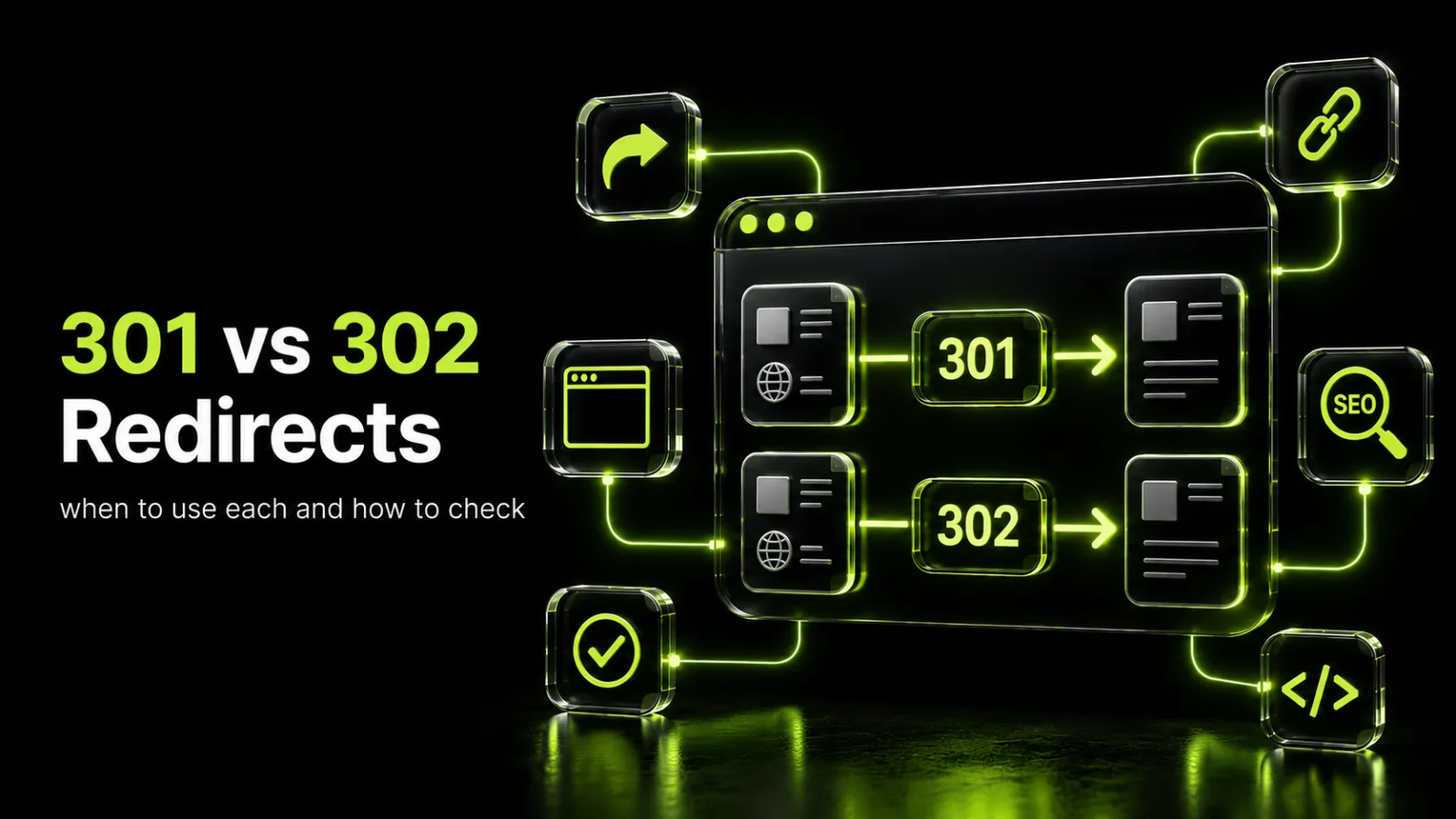
If a URL has no unique purpose, traffic, conversions, links, or relevant replacement, a 404 or 410 can be correct. If a close replacement exists, use a 301 redirect instead.
| Method | Use it when | Avoid |
|---|---|---|
| 301 redirect | content was merged or permanently replaced | redirecting unrelated URLs to the homepage |
| canonical | a duplicate must remain available, but another URL should represent it in Search | using it instead of merging distinct content |
| noindex | users need the page, but it should not appear in Search | blocking robots.txt when Google must read the noindex rule |
| 404/410 | the page has no value and no suitable replacement | returning 200 for an empty or deleted page |
If the preferred page is not indexed, complete the step-by-step indexing diagnosis first. You cannot assess fair competition when a candidate is blocked, mis-canonicalised, or returning an incorrect status.
Common conflicts include:
Decide which combinations have independent demand, a useful selection, and lasting value. A “black office chairs” page may deserve indexing when customers search for it and enough products remain available. A filter producing one item and boilerplate copy probably should not become a search landing page.
Every indexable URL needs a defined role, stable inventory, clear Title and H1, self-referencing canonical, and crawlable internal links. Sorting, empty combinations, and technical parameters should be governed at CMS or platform level.
Organic and paid landing pages can use the same keyword themes without directly cannibalizing each other because they operate in different channels. The risk appears when every ad group creates a thin indexable landing page with minimal copy changes.
Make advertising pages genuinely distinct or keep temporary test variants out of the index. During Google Ads setup and management, align campaign landing pages with the SEO map so experiments do not produce organic duplicates.
Export queries and pages. Collect titles, H1s, canonicals, status codes, internal links, backlinks, and conversions. Group possible competitors.
Compare intent overlap, traffic risk, and business value. Start with clusters already receiving impressions, displaying ranking instability, or producing leads.
Separate roles, merge content, implement redirects, and correct canonicals, sitemaps, hreflang, and internal links. Document every changed URL.
Test status codes, redirect chains, indexability, language annotations, analytics, and conversion events. Request recrawling once after a material update rather than submitting the same URL repeatedly.
Do not expect an overnight increase. Google needs to recrawl pages, process redirects, and reassess signals. Compare 28-day periods and account for seasonality.
Useful indicators include:
When the fix affects templates, filters, multilingual rules, or thousands of pages, involve website support and maintenance so the CMS implementation does not introduce new technical conflicts.
Keyword cannibalization is not the use of the same words on two pages. It is a conflict of roles and search intent. Confirm the issue with Search Console, SERP evidence, analytics, and a URL map. Then choose the appropriate action: separate intent, strengthen the preferred page, merge content, redirect a retired URL, canonicalise a real duplicate, or remove a page without value.
The strongest preventive system is a shared “cluster → intent → URL” map used by SEO, content, design, and development teams. If you need a structured audit of competing pages and a safe implementation plan, contact BB STUDIO.
 SEO
SEO
 SEO
SEO
 Web development
 Google Ads
 Let’s create something amazing together
