We create digital solutions that work for businesses

Keyword research is not the process of collecting the longest possible spreadsheet. It is a structured model of demand: what potential customers search for, why they search for it, and which page should provide the best answer. A raw list creates duplicated pages, internal competition, and irrelevant traffic. A useful keyword map shapes the site architecture, content plan, and route to conversion.
Keyword research is the foundation of professional SEO services, but it cannot work alone. Technical accessibility, page quality, internal links, authority, and measurement determine whether the plan can produce sustainable organic growth.
A semantic core is an organised set of search queries relevant to a business. In English-language SEO, “keyword research”, “keyword universe”, and “keyword map” are more common terms. For each query or cluster, record:
wording and language;
target country or region;
estimated demand and seasonality;
search intent;
topic cluster;
target URL;
business value and priority;
impressions, clicks, rankings, and conversions after publication.
“Buy a sofa”, “custom sofas”, and “how to choose a sofa” belong to the same broad topic, but they should not automatically point to the same page. The first expects a catalogue, the second a custom-manufacturing service, and the third a guide. The goal is to understand the need behind the wording.
A keyword map answers key questions before copywriting begins:
Which services and products have genuine search demand?
Which landing pages are required?
Which informational topics support commercial pages?
Where is the intent transactional rather than informational?
Which existing URLs compete with each other?
What should the team publish first?
Which queries can inform paid search campaigns?
How will performance be measured?
For a new project, the research affects navigation, categories, filters, and URLs. It should therefore happen before website development whenever possible. On an existing site, it reveals missing themes, weak pages, and structural problems.
Search intent is the outcome a user expects. A practical classification is:
| Intent | Example | Best page type |
|---|---|---|
| Informational | how to choose web hosting | article or guide |
| Commercial investigation | best WordPress hosting | comparison or solution page |
| Transactional | hire an SEO agency | service page or landing page |
| Navigational | Google Search Console login | specific brand or product page |
Intent can be mixed. “SEO audit” may mean a paid service, a checklist, or a free tool. Inspect the current search results: page types, SERP features, titles, and recurring subtopics show the dominant expectation more reliably than the phrase alone.
Document what the business sells, target locations, audiences, conversion actions, profitable directions, excluded services, and operational limits. High search volume is irrelevant when the company cannot satisfy the need.
List products, services, customer problems, attributes, locations, and industry synonyms. These short seed topics are inputs for discovery, not the final structure. An SEO agency might start with technical SEO, local SEO, content, links, indexing, and analytics.
Use a combination of:
Google Search Console for queries that already generate impressions;
Google Keyword Planner for ideas and advertising estimates;
Google Trends for relative interest and seasonality;
autocomplete, People Also Ask, and related searches;
competitor categories, service pages, and articles;
internal site search;
sales calls, forms, chats, and support tickets;
product feeds, price lists, and attributes.
Search Console reflects real users of an existing site. Keyword Planner was designed for advertising, so its ranges are not a precise forecast of organic traffic. Combining sources reduces blind spots.
Remove or label queries for unavailable products, unsupported locations, unrelated brands, jobs, training, templates, and free resources when they do not fit the business model. Deduplicate spelling variants and technical noise, but do not discard a low-volume query merely because the number is small. Narrow long-tail terms can be far closer to conversion than broad head terms.
Your working table should include query, intent, cluster, target URL, demand, business value, priority, and status. Separate demand from value: volume estimates describe searches, while business value describes the likelihood and value of a conversion.
A cluster is a group that one page can satisfy well. Combine queries when they share:
the same intent;
the same expected page type;
substantial overlap in the ranking URLs.
If two queries return mostly the same pages, one strong page may cover both. If one SERP is dominated by product categories and the other by guides, use separate pages even when the wording is similar.
Soft clustering creates broader pages. Hard clustering demands stronger SERP overlap and creates more groups. Excessive fragmentation gives a small site dozens of thin pages; overly broad clusters can hide valuable subcategories in a large ecommerce site.
Assign every cluster one primary URL and record:
primary and supporting queries;
intent and page type;
current or planned URL;
Title and H1;
essential sections;
internal-link targets;
action: create, update, merge, redirect, or remove.
This becomes a shared brief for SEO, content, design, and development.
Do not sort only by volume. Consider product relevance, commercial value, realistic competition, current rankings, seasonality, production cost, funnel role, and dependencies. Improving pages already receiving impressions around positions 6–20 can be more productive than publishing a large batch of unsupported content.
Service pages answer commercial intent with scope, process, timing, pricing logic, proof, FAQs, and a conversion action. Product categories provide inventory, filters, attributes, and purchasing information. Product pages target models, brands, specifications, availability, delivery, and reviews. Articles solve a question or problem and lead naturally to a relevant commercial solution.
The format must match the SERP and user expectation. Adding a 3,000-word essay to a product category does not make it more helpful when visitors primarily need products and filters.
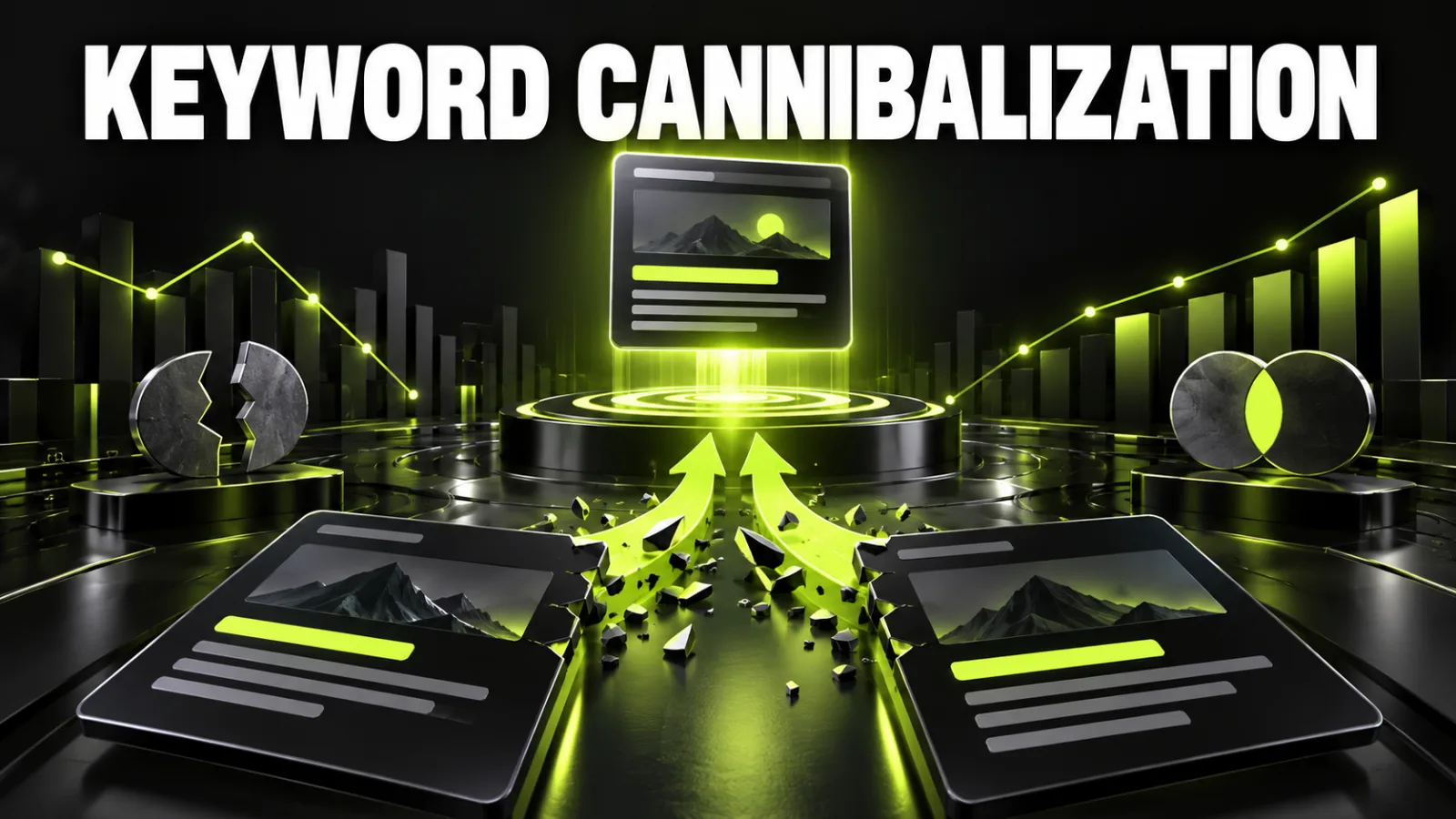
Cannibalisation occurs when several URLs compete for the same intent without a clear primary page. Common signs include changing ranking URLs, nearly identical titles and headings, unstable positions, and internal links that use the same anchor for different destinations.
Possible solutions include merging content, using a 301 redirect, differentiating intent, changing the page format, and correcting internal links. A canonical tag is not a universal fix for two different weak pages.
Check indexability to confirm that the selected URL is accessible to search engines. If a page is missing from search, follow the guide on why a website is not being indexed by Google.
Use the primary phrase in the Title, H1, introduction, and relevant copy only where it reads naturally. Supporting terms belong in sections that answer them. Questions can become FAQs; attributes belong in filters, tables, and product data; location modifiers should appear only for places the business genuinely serves.
Google explains that its language matching systems can connect a page with many query variations even when every exact phrase is not present. Repetition for its own sake harms readability and may violate spam policies. Build the best answer first, then verify that the topic and important entities are clear.
Before publishing, review the title and description with the meta tag analyser and test the appearance with the SERP preview tool.
Keyword clusters reveal which pages should support each other. A pillar page links to detailed subtopics, while articles link back to the relevant service or category. Anchor text should describe the destination instead of repeating one exact-match phrase across the whole site.
The broad guide on how to rank a website in Google can connect to detailed resources about keyword research, technical audits, and indexing. This creates a navigable topic cluster rather than isolated posts.
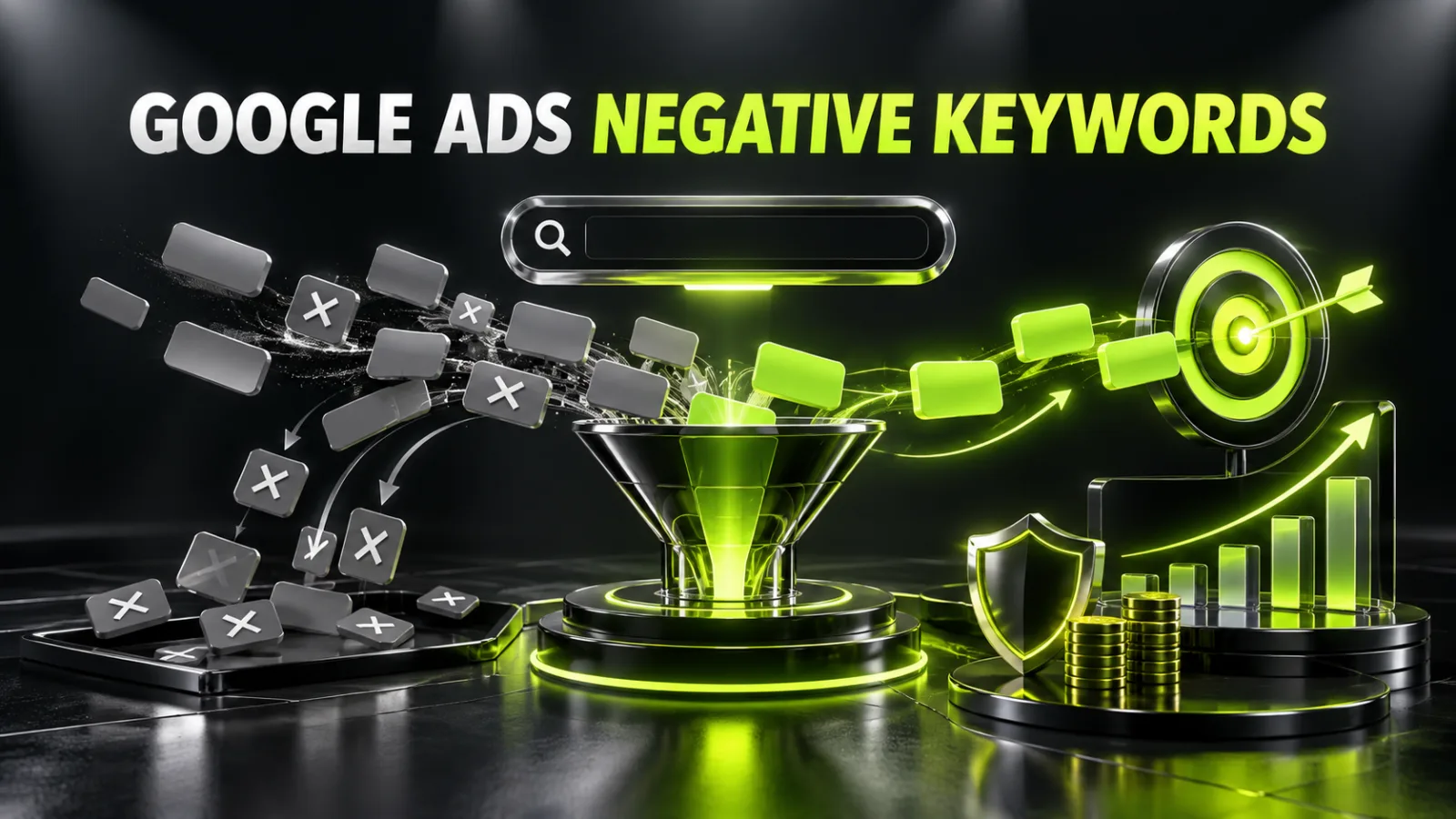
SEO and paid search use overlapping data but different logic. Ads require match types, negative keywords, bid economics, and fast conversion feedback. SEO pages may receive impressions for hundreds of related phrases and compound their value over time.
Paid campaigns can validate commercial intent before a business invests in a large organic content cluster. However, an ad-account export should not be copied directly into a site structure. BB STUDIO can align landing pages, SEO, and Google Ads management around the same business goals.
Do not translate the source spreadsheet word for word. Languages and markets differ in phrasing, demand, competitors, terminology, locations, and commercial expectations. Research each version separately, create a local keyword map, and then connect equivalent pages with hreflang rather than canonical tags.
Track impressions, clicks, CTR, ranking distribution, the number of landing pages receiving organic visits, conversions, assisted conversions, ranking-URL changes, lead value, and indexability. Record publication and update dates so that changes can be compared fairly.
Google notes that some SEO changes can appear within hours, while others may take weeks or months. Evaluate trends over comparable periods and account for seasonality rather than judging the plan the next day.
Collecting keywords that have no business relevance.
Creating a separate URL for every wording variation.
Mixing informational and transactional intent.
Prioritising volume without conversion value.
Copying one competitor's structure.
Ignoring existing Search Console data.
Forcing exact-match phrases into copy.
Mapping one cluster to several primary URLs.
Failing to refresh the map as demand changes.
Reporting traffic without leads or revenue.
business goals, markets, and audiences are defined;
data comes from several sources;
irrelevant and duplicate queries are removed;
each query has an intent and cluster;
each cluster has one primary URL;
missing, existing, and competing pages are marked;
create/update priorities are documented;
Title, H1, sections, and internal links are briefed;
impressions, clicks, and conversions are measurable;
the next review date is scheduled.
A small service site can be mapped manually when the owner understands customer language and reviews SERPs carefully. Ecommerce, marketplaces, and multilingual sites require more data and quality control. One clustering error can create hundreds of unnecessary URLs or hide valuable categories.
Professional input is especially useful before migration, redesign, international expansion, or a large content programme. The article on SEO pricing explains the work and budget behind ongoing optimisation.
Strong keyword research is a map of demand, not a list to paste into copy. Combine customer language, intent, site structure, business value, and performance data. Collect evidence from several sources, clean it, cluster by intent and SERP overlap, assign one URL to each group, and keep the map current.
To turn research into a prioritised site structure and content plan, discuss your SEO project with BB STUDIO. The team will review demand, competitors, current pages, and technical constraints before recommending the next actions.
 SEO
SEO
 Google Ads
 SEO
SEO
 SEO
SEO
 Let’s create something amazing together
