We create digital solutions that work for businesses
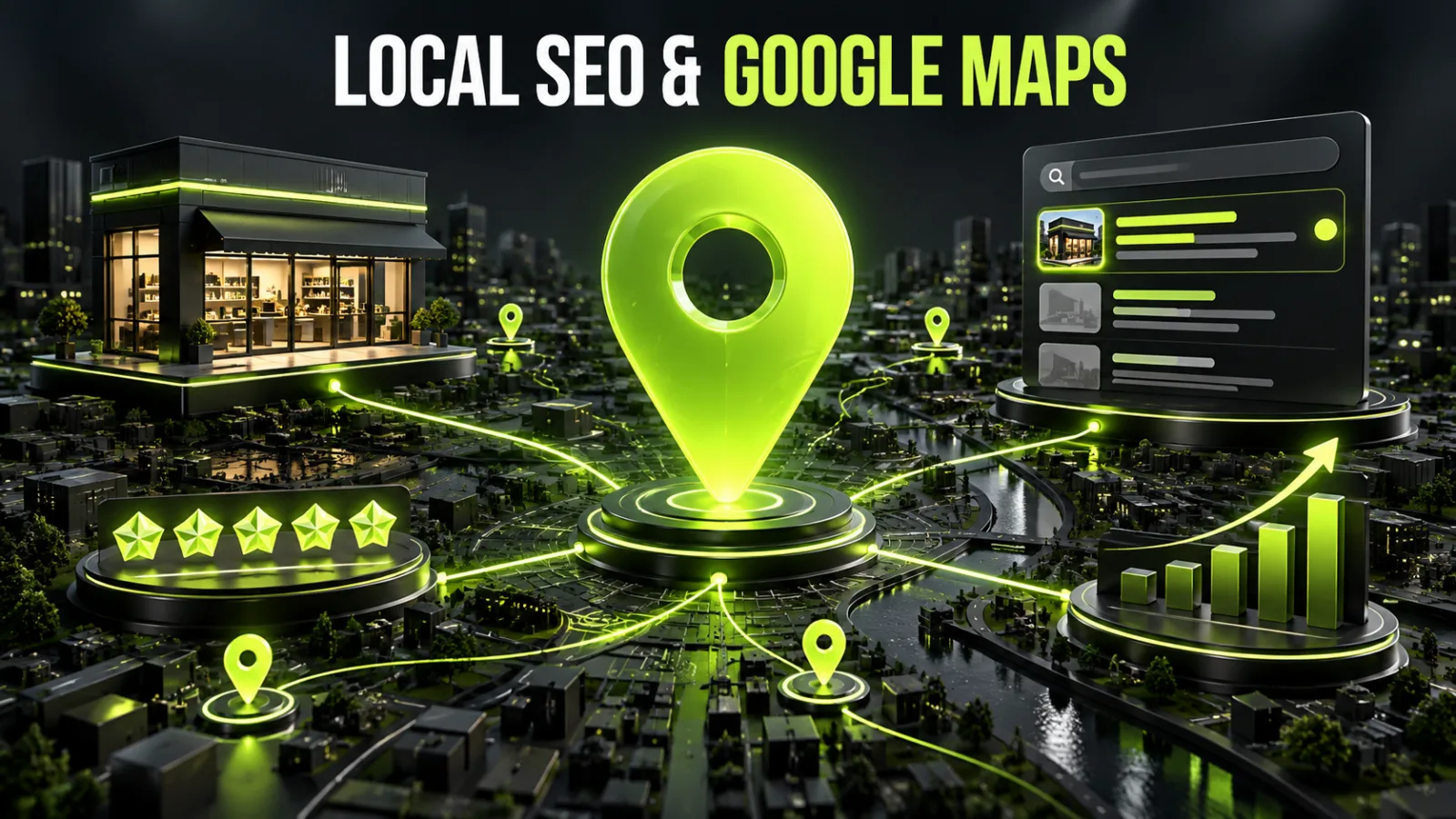
When someone searches for “dentist near me,” “laptop repair in Warsaw,” or “lawyer in central London,” Google tries to show relevant businesses close to the searcher, not simply the strongest websites globally. The result may include a map, several Business Profiles, organic pages, and ads. Local SEO helps a company appear across these surfaces and turn discovery into calls, directions, appointments, and qualified enquiries.
No single edit creates sustainable visibility. The system needs an accurate Google Business Profile, relevant website pages, consistent business details, genuine reviews, local evidence, and reliable measurement. Businesses that need a complete strategy can use BB STUDIO’s professional SEO services for technical, content, and analytics work.
Local SEO is the process of improving visibility for searches connected to a place or to the intent to find a nearby provider. Geography may be explicit, such as “office cleaning in Manchester,” or implicit. For “coffee shop near me,” the search engine uses the searcher’s location.
A local presence has four connected layers:
The profile does not replace the website, and the website does not make the profile unnecessary. Maps answers “where, when, and how to contact,” while the website explains the service, pricing logic, team, evidence, process, and conditions.
Local optimization is especially valuable when distance influences the choice:
An online-only business without face-to-face contact usually needs standard SEO rather than a local profile. Do not create a fictional address merely to appear on a map. The listing must be eligible and represent a real operation.
Google describes local ranking through three main groups of factors:
A business can improve relevance and prominence, but it cannot change its physical distance from every searcher. A promise of “guaranteed number one in Google Maps” is therefore misleading. Even a well-optimized location can rank differently across neighbourhoods, devices, and queries.
Before changing the profile, document:
Without this foundation, the profile may gain views while producing few useful enquiries.
Search for the company before creating anything. If a listing already exists, claim it instead of building a duplicate. Complete the available verification method. The business should retain primary ownership and add an agency as a manager; sharing a personal Google password is unnecessary.
The name should match signage, legal materials, and normal branding. Do not add cities, services, phone numbers, or promotional phrases unless they are genuinely part of the name. Keyword-stuffed names may be edited, reported, or suspended.
The primary category describes the central business type, not every possible service. It affects available features and relevance. Choose the closest category and use additional categories only for real, meaningful operations. Adding a long list of loosely related options does not make the company relevant to every search.
Display the address when customers can visit the staffed location during stated hours. If the team only travels to clients, hide the address and define realistic service areas. A post-office box, virtual office, or location without staff is not an acceptable customer-facing branch.
A hybrid business can display its premises and specify an area served. Do not select a whole country through random cities when the team cannot fulfil work there.
Use a working local or primary phone number, the correct website page, normal hours, and special holiday hours. The profile link should lead to the relevant location or offer, not a generic page in the wrong language. Update the profile, website, and important directories together whenever details change.
Use customer-friendly names for genuine services. Descriptions can explain scope, important conditions, or pricing principles, but should not become keyword lists. Complete relevant attributes for accessibility, parking, appointment options, service methods, and payment when available.
Explain who the business helps, what it provides, its specialization, and where it operates. Avoid links, HTML, promotions, and unverifiable superlatives. The description should clarify the offer rather than repeat a spreadsheet of search terms.
Add a logo, cover image, exterior, entrance, interior, staff, process, equipment, products, and completed work as appropriate. Entrance and approach photos reduce “how do I find you?” calls. Images should be focused, well lit, and representative of reality rather than heavily filtered.
Add new media when the premises, staff, equipment, menu, or seasonal offer changes. Ten credible photographs are more useful than a large collection of stock images.
If the category supports appointments, orders, menus, or messages, connect only channels the team can actually manage. Test the entire mobile journey. The button must open the correct page, the form must work, and displayed availability must match operational capacity.
Keyword research should go beyond “service + city.” Local searches have different intentions:
| Intent | Example | Best destination |
|---|---|---|
| find a business type | dentist near me | profile and location page |
| book a service | dental implant London | dedicated service page |
| urgent need | emergency plumber now | fast page, phone, hours |
| compare providers | best garage in district | evidence, cases, reviews |
| check price | sofa cleaning price Bristol | price page or calculator |
| navigate to a brand | company name address | profile and contact page |
Collect wording, locations, districts, synonyms, and questions, then group them by shared intent. The complete process is covered in the keyword research and mapping guide.
A Business Profile gives quick facts; the website proves suitability. A single-location business usually needs:
If the existing website cannot support this structure or performs poorly on mobile devices, consider turnkey website development before building promotion on a weak foundation.
A dedicated page is justified when the business has a real branch or genuinely serves an area and can provide unique information. Include:
Do not publish dozens of pages where only the city name changes. Thin pages do not help searchers and may compete with one another. When growth has stalled, use the diagnostic article on why a website is not growing in Google.
The business name, address, phone number, website, and hours should be current on the official website and important third-party platforms. Perfect punctuation is less important than accuracy, but conflicting addresses, old numbers, and duplicate profiles create customer confusion.
Create a citation register covering Google, social networks, industry directories, local listings, booking platforms, and partner pages. After a move or phone change, update the main sources and resolve duplicates.
Structured data helps a search engine interpret details on a page. For a genuine local location, use the most specific applicable LocalBusiness type and relevant properties:
Markup does not guarantee a rich result and cannot legitimize a false address. JSON-LD data must match visible page content. Test it before publishing with Rich Results Test; the BB STUDIO tools can support related technical checks.
Ask for feedback after a genuine experience: a visit, delivery, completed repair, or consultation. Google allows businesses to share a direct link or QR code, but prohibits incentives in exchange for posting, changing, or removing a review.
A practical workflow:
Do not divert unhappy customers to a private form while sending only satisfied customers to Google. A credible profile reflects different experiences, and a professional response may matter more than a perfect score.
Quality and relevance matter more than volume. Useful sources may include:
Avoid buying hundreds of identical directory entries. A local link should be placed where potential customers may find it or where it proves a genuine relationship to the area.
Create material that helps people make a decision:
Every article should lead naturally to a service, location, or booking step. For a broader channel strategy, see how to get customers for a small business.
Even a strong profile loses leads if the destination page fails. Check:
Ongoing control can be handled through website support and maintenance so an unnoticed technical failure does not erase SEO gains.
Do not judge success from a single manual rank check. Track the complete funnel:
profile or page impression → interaction → enquiry → confirmed appointment → visit → sale → repeat purchase
| Level | Useful metrics |
|---|---|
| Profile | views, search terms, calls, website clicks, directions, bookings |
| Website | organic visits, landing pages, phone clicks, forms, appointments |
| Sales | qualified leads, attended visits, revenue, CAC, repeat purchases |
| Reputation | new reviews, review themes, response time, average rating |
Add UTM parameters to the profile link, configure GA4 events, and store the source in the CRM. Use a clear call-attribution method without exposing customers to inconsistent phone details. Profile analytics show interactions; the CRM reveals whether they produced revenue.
Organic visibility compounds over time, while search advertising can test demand, messaging, and a landing page more quickly. The channels can work together:
Do not send every campaign to a generic homepage. Query, ad, page, and geography should express one consistent offer. A business can use Google Ads setup and management for faster testing without treating paid traffic as a substitute for long-term local SEO.
Each genuine branch needs its own profile and page. Provide accurate contacts or routing, hours, services, photographs, and local staff. Centralize quality standards, but do not copy all content word for word.
Hide the address when customers are not served there. Explain actual coverage, call-out terms, minimum order, surcharges, and timing. Area pages need real local differences rather than a swapped city name.
Doctors, lawyers, estate agents, and other public-facing practitioners may qualify for individual profiles under specific conditions. Do not create a listing for every employee simply to occupy more map space.
Coordinate the change across the website, profile, directories, navigation, structured data, and ads. Do not automatically create a new listing if the existing profile can be accurately updated while preserving its history.
Local SEO is not a trick for mechanically moving a map pin upward. It is a system that helps Google understand the business and helps customers verify the service, place, reputation, and conditions before taking action.
Start with truthful data, an accurate category, strong service pages, real photographs, and an ethical review process. Then connect the profile to the website, analytics, and CRM. For an audit and a plan tailored to a particular city and niche, contact BB STUDIO.
 SEO
SEO
 SEO
SEO
 SEO
SEO
 SEO
SEO
 Let’s create something amazing together
