We create digital solutions that work for businesses
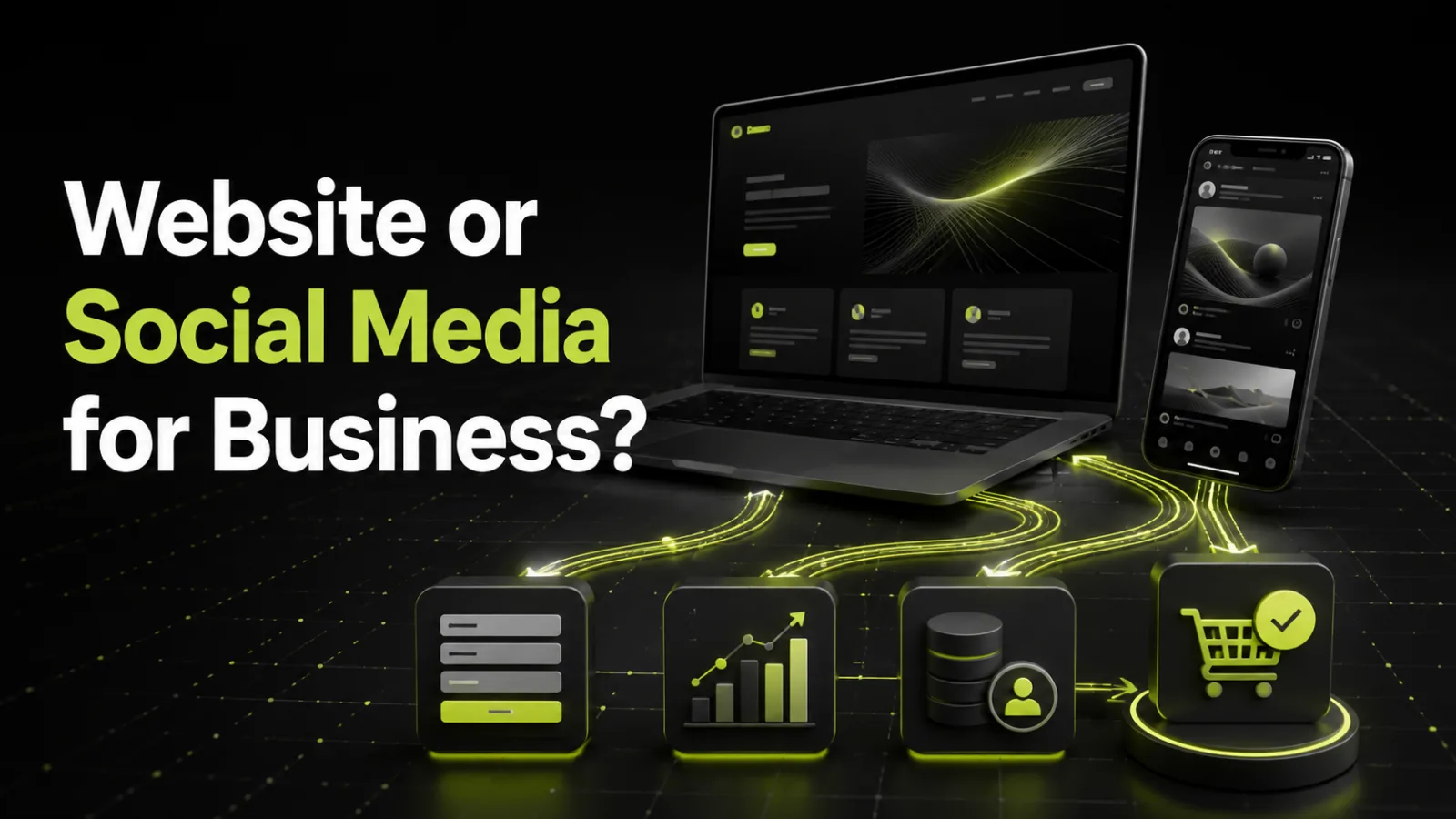
Website versus social media is not a true either-or choice. Instagram, Facebook, and TikTok attract attention, demonstrate personality, and maintain community. A website explains an offer, captures search demand, collects enquiries, and gives the business more control over the customer journey.
Some early-stage businesses can operate with a social profile. The limitation appears when the same account must become the catalogue, price list, support desk, booking system, review archive, and only sales channel.
Use social media for reach, content, first contact, and conversation. Use a website for search, structured information, advertising destinations, conversion, analytics, automation, and control.
The most resilient route is:
social content → relevant website page → conversion → CRM → follow-up.
| Area | Social media | Owned website |
| Launch | Fast profile setup | Requires structure, content, and development |
| Discovery | Feeds, recommendations, followers, ads | Search, ads, referrals, direct traffic |
| Control | Platform defines format and rules | Business controls structure and features |
| Search | Limited control over commercial search pages | Dedicated pages can target distinct demand |
| Presentation | Strong for process and living content | Strong for services, cases, pricing, and FAQs |
| Conversion | Messages and platform features | Forms, checkout, booking, calculators, portals |
| Measurement | Platform-specific reporting | GA4, CRM, custom events, and attribution |
| Growth | Limited by platform capabilities | Can expand around business processes |
A poor website does not beat a strong profile automatically. Performance still depends on the offer, content, traffic quality, and conversion path.
A social-first start can work when testing an offer, handling few enquiries manually, selling through a personal brand, changing the assortment frequently, and not yet investing in Google search.
Even then, store customer contacts and lead status outside the inbox so the relationship is not limited to a conversation thread.
Customers repeatedly ask for the same prices, terms, or examples.
Enquiries disappear among reactions and messages.
The company wants to capture demand from Google.
Booking, payments, quoting, delivery, or CRM integration are required.
Advertising performance is difficult to connect with sales.
The offer requires detailed evidence and explanation.
Revenue depends on a single external account.
The company is adding products, markets, languages, or salespeople.
Google describes SEO as helping search engines understand content and helping people discover and evaluate a website. Meta also documents that accounts can be restricted or disabled under its policies, with review procedures available. Neither fact makes social media ineffective; it means the channel should not be the company’s only infrastructure.
Social platforms are effective at creating interest through video, process, news, personality, and community. A website supports evaluation when the prospect needs pricing, specifications, service scope, proof, terms, or a case study.
Use each channel for its strongest role:
social media: awareness, conversation, short-form content, and community;
website: permanent service pages, catalogue, pricing, cases, FAQs, forms, and payment;
email and messaging: follow-up and service communication;
CRM: ownership, status, history, and sales outcome.
Use it for a time-limited market test. Define the offer, publish, promote, and record enquiries. Build an owned conversion point once demand is confirmed.
Suitable for one service, event, course, or campaign. Social content creates attention, while a landing page captures and measures the enquiry.
Suitable for several services, case studies, and organic growth. Each business direction receives a dedicated page, and social content links to the most relevant destination.
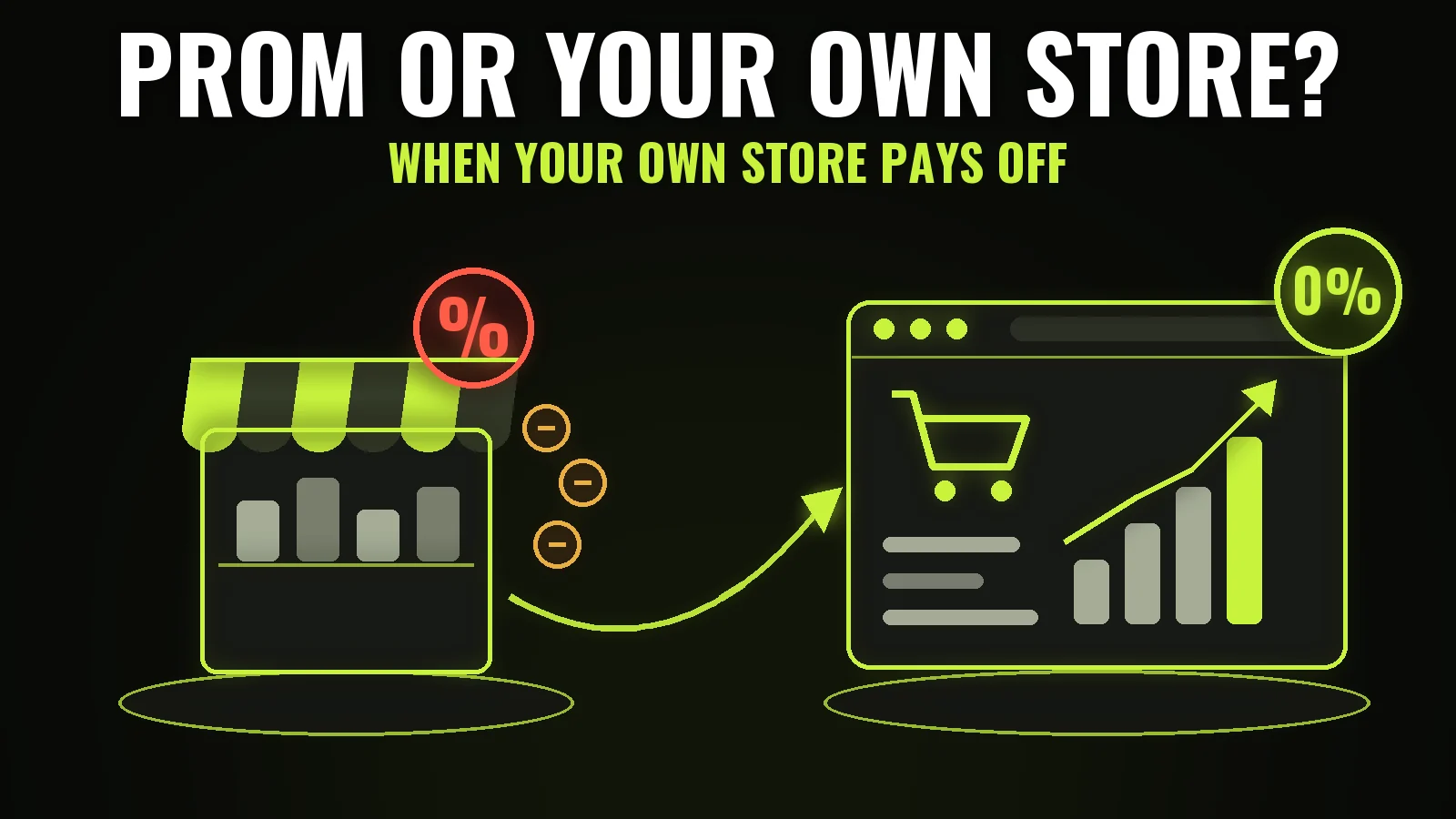
Suitable for a stable product catalogue. Social media demonstrates products, the store handles checkout and delivery, and CRM supports fulfilment and retention.
Link to a relevant service or product page rather than the home page. Add UTM parameters to profile and campaign links. Keep campaign naming consistent. Build website pages that continue the promise made in the post or advertisement. Send enquiries to CRM and measure qualified outcomes, not form submissions alone.
Google Analytics documents that UTM parameters identify source, medium, and campaign in acquisition reports. This makes it possible to compare social campaigns by business outcome rather than likes.
Track qualified enquiries, conversion rate, cost per lead and sale, channel revenue, repeat customers, response time, and missed enquiries. Combine GA4 campaign data with the final CRM status.
If traffic already reaches the site without producing enquiries, review the article on traffic without leads.
BB STUDIO starting prices are UAH 9,900 for a landing page, UAH 12,900 for a brochure website, UAH 16,900 for a catalogue, UAH 19,900 for a corporate website, and UAH 29,900 for an online store. Scope, design, content, languages, and integrations determine the final budget. Use the pricing calculator for an initial estimate.
Social media creates attention and contact. A website structures the offer and captures action. CRM retains the history, while analytics shows what produces revenue. Start social-first when validating an idea, but build an owned platform when search, advertising, automation, evidence, or scale becomes important.
 For business
 E-commerce
 Web Application Development
 Web development
 Let’s create something amazing together
