NEW CASE
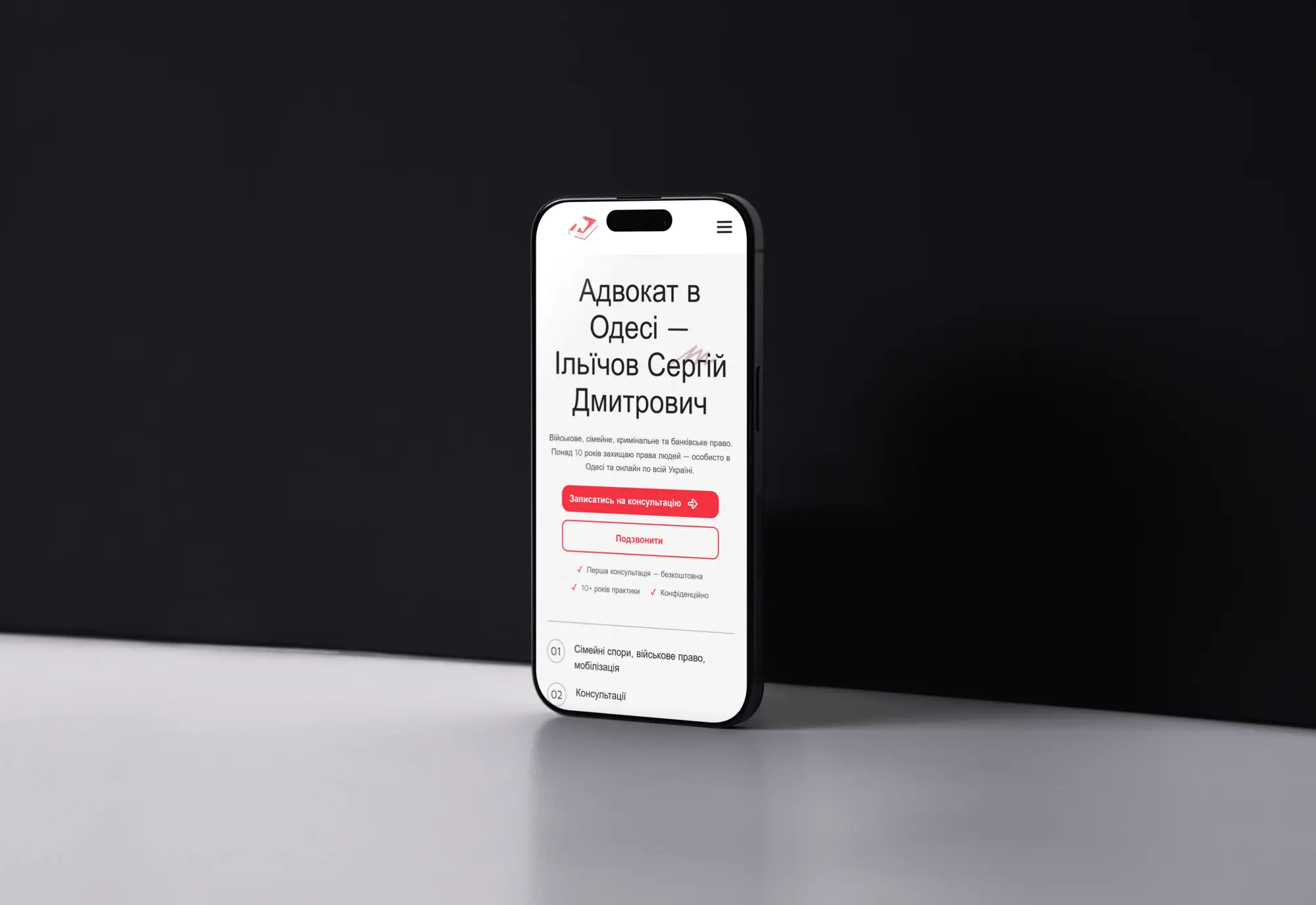
Serhii Illichov, Attorney at Law — business card website case study

We create digital solutions that work for businesses


Give us a call +38 (066) 35-14-529

Let's take the first step towards your website — write to us

Close
Tools

Transliteration

Ukrainian Latin script by the official standard.

What transliteration is for

Cyrillic does not work where a system expects Latin. The name is then rewritten in Latin letters following an official rule.

Page URLs Latin URLs stay readable and do not turn into a string of percent signs when copied. Noticeably better for SEO.
Documents and tickets A surname in a passport follows the official standard. The spelling on a ticket must match the passport letter for letter.
File names Cyrillic file names break on servers or turn into unreadable characters. Latin avoids the problem.
International services Payment systems, delivery, bank transfers — all expect the name and address in Latin.

The letters people get wrong

The official Ukrainian standard differs from the intuitive “write what you hear”. These are the tricky ones.

Г → H, Ґ → GThis way round, not the other. Гончар becomes Honchar, not Gonchar.
И → Y, І → ITwo distinct letters map to two distinct Latin ones. Ірина becomes Iryna.
Ї → YI / IYI at the start of a word, plain I inside. Їжак becomes Yizhak, Україна becomes Ukraina.
Й → Y / IY at the start, I inside. Йосип becomes Yosyp, Олексій becomes Oleksii.
Ь → nothingThe soft sign is dropped entirely. Тернопіль becomes Ternopil.
ЗГ → ZGHA special rule so it is not confused with Ж (ZH). Розгон becomes Rozghon.

Ukrainian and Russian standards differ

Ukrainian

Official standard

In force since 2010, used in passports and on government sites.

  • Г maps to H, Ґ maps to G
  • Я is Ya initially, ia inside
≠
Russian

Different rules

A separate standard with different mappings — the two should not be mixed.

  • Г maps to G
  • Я is Ya everywhere

For documents or URLs on a Ukrainian site, use the Ukrainian standard. Changing a passport spelling later is difficult, so check before you file.

Ukrainian transliteration online

The tool converts Ukrainian text to Latin strictly by the official table of the Cabinet of Ministers of Ukraine (resolution No. 55 of 27.01.2010) — the same standard used for international passports, driver's licenses and official documents. Just type — the result appears instantly, honoring all the special rules: "зг" → zgh, initial Є/Ї/Й/Ю/Я → Ye/Yi/Y/Yu/Ya.

Who needs it: verifying a name spelling for documents, creating correct Latin URLs for a website, addressing international shipping, filling in banking details. Unlike "folk" transliteration, here it is Kyiv, not Kiev, and Kharkiv, not Kharkov — exactly as the standard requires.


Rate this tool
It tells us what to improve first
Be the first to rate 5.0 of 5 0 votes

FAQ

Which standard is the transliteration by?
By the official table of the Cabinet of Ministers of Ukraine (resolution No. 55) — the one used for international passports and government documents.
Why is transliteration needed?
For document processing, writing names in Latin in passports, creating clear URLs for websites and correct display in systems without Cyrillic.
Why does "щ" become "shch"?
The official standard requires it: Ukrainian "щ" is rendered by four Latin letters shch. This differs from Russian transliteration.
Are transliteration and translation the same?
No. Transliteration conveys the sound in letters of another alphabet (Київ → Kyiv), while translation conveys the meaning in another language.
How do I transliterate Ukrainian into Latin letters online?
Type or paste the text into the field — the Latin version appears instantly with no button to press, and the button next to the result copies it to the clipboard. Digits, punctuation and Latin letters stay as they are, so whole addresses or lists of names can be pasted at once. For documents, compare the result with any passport already issued: if the surname is spelt differently there, use the passport spelling for tickets and bookings.
What is the Ukrainian Latin alphabet?
The phrase usually means writing Ukrainian words in Latin letters. The official version is the table from Cabinet of Ministers resolution No. 55: it sets Latin equivalents without diacritics, so the result can be typed on any keyboard. Separate Latin alphabets for Ukrainian with letters such as č or š have been proposed, but they are not used in documents. The tool follows the official table.
Can I transliterate Russian text?
No, the tool handles the Ukrainian alphabet only. The letters “ы”, “э”, “ё” and “ъ” are not in the Cabinet of Ministers table, so they stay in Cyrillic, while shared letters follow Ukrainian rules: “г” becomes h and “и” becomes y. Russian text needs a different transliteration standard, and the result here would be wrong.
How are the apostrophe and capital letters handled?
The standard drops the apostrophe: “Знамʼянка” becomes Znamianka and “Марʼяна” becomes Mariana. Case is preserved: a capitalised word starts with a capital Latin letter (“Щербак” → Shcherbak), and a word written entirely in capitals stays that way (“ЩЕРБАК” → SHCHERBAK). Handy for passport-style data, where surnames are written in capitals.
Telegram Viber Call us