We create digital solutions that work for businesses
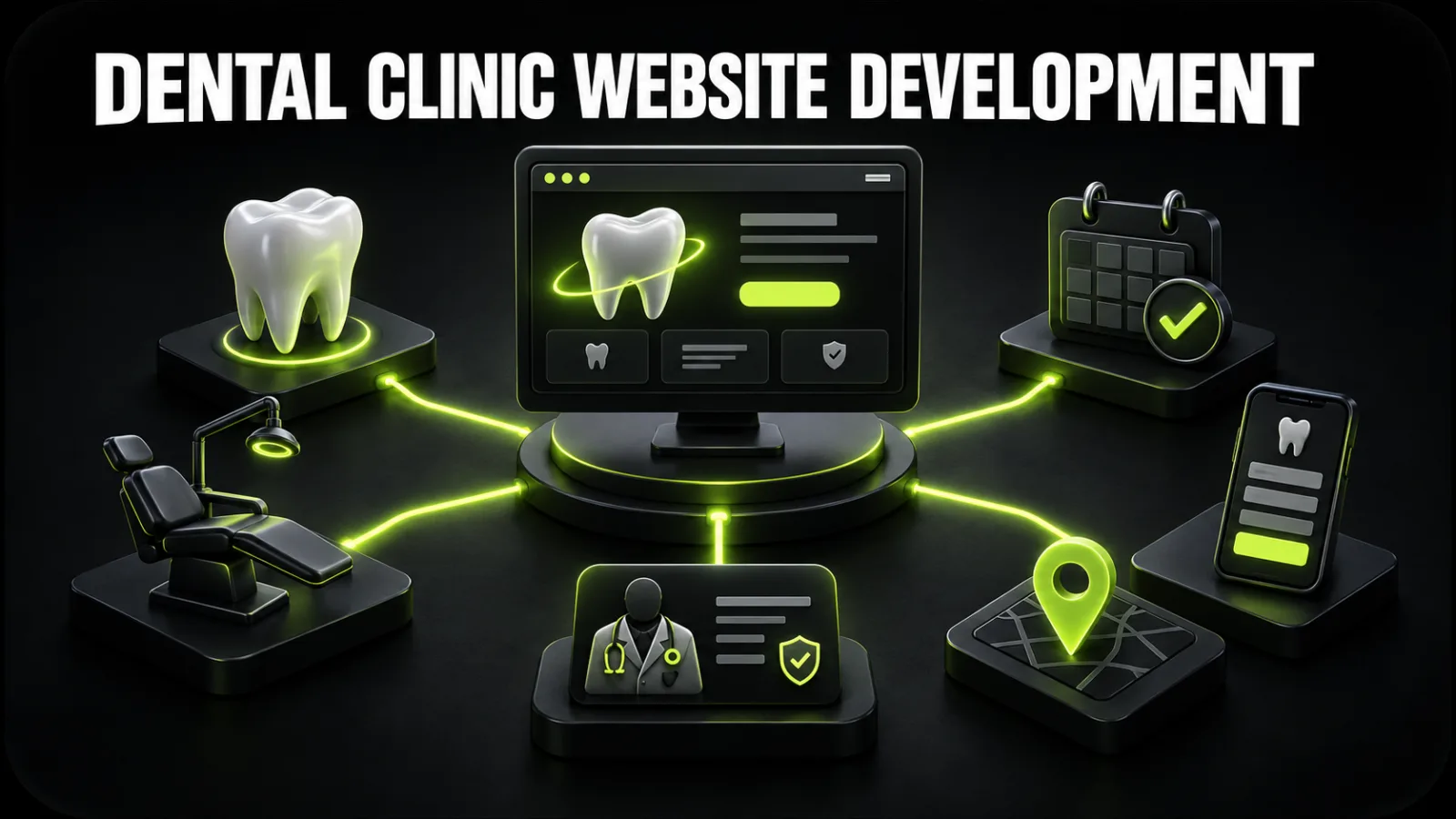
Patients rarely choose a dental practice because of visual design alone. They want to know whether the clinic treats their problem, who will provide care, what the likely cost is, where the practice is located, when an appointment is available, and what happens after booking.
The website must answer these questions before the visitor returns to search results. A strong site is therefore not one page with a service list. It is a system of landing pages, dentist profiles, fees, local information, booking flows, and analytics. Professional business website development begins with the patient journey rather than a hero image.
The website should build trust, explain treatment options, capture local demand, and simplify appointments.
Clarify services. Patients immediately see whether the clinic offers general dentistry, orthodontics, implants, oral surgery, paediatric dentistry, or urgent care.
Help people choose a clinician. Profiles show qualifications, focus areas, location, and availability.
Provide a financial frame. Prices or transparent calculation principles reduce anxiety about an unknown bill.
Shorten the path to booking. Calls, forms, or live calendars appear on every important page.
Create organic entry points. Every priority treatment has a substantial page matching its own search demand.
Support local discovery. Addresses, hours, maps, and branch information remain consistent.
Measure outcomes. Analytics connects channels to enquiries, confirmed bookings, and attended appointments where the process and privacy settings allow it.
Broader planning resources are available in the Web Development category.
This model suits one clinician or a small office with a focused service list. It needs a homepage, service pages, dentist profile, fees, FAQ, and contact. Booking can be a short request confirmed by the receptionist.
A clinic needs individual treatment pages, team profiles, relationships between services and dentists, fees, clinic photography, reviews, insights, and CRM or practice-management integration. The site must make clear who works where and when.
Add location pages, dentist filters, different schedules, directions, local contacts, location-specific availability, centralized booking, and enquiry routing. The information architecture must prevent branches from creating duplicate pages.
The appropriate first release can be defined with the guide on creating a business website from scratch.
Design around the real sequence:
the patient searches for a problem or treatment;
lands on a relevant service page;
reviews indications, process, limitations, and alternatives;
checks dentists, fees, and location;
chooses a contact method;
receives confirmation;
attends the consultation;
may later receive a reminder or review request.
Every stage has questions. If visitors must return to the homepage to find a phone number, or the site displays an unavailable slot, trust is lost before the appointment begins.
| Page | Essential content | Primary action |
|---|---|---|
| Homepage | positioning, treatments, dentists, prices, locations, evidence, booking | choose a treatment or book |
| Services | treatment categories with clear summaries | open the relevant service |
| Treatment page | problem, suitability, process, clinicians, fees, FAQ | request a consultation |
| Dentists | filter by expertise and location | open a profile |
| Dentist profile | qualifications, focus, locations, availability, publications | book with the dentist |
| Fees | categories, inclusions, units, review date | understand the likely budget |
| Locations | address, map, access, hours, contact, clinicians | choose a clinic |
| About | registration details, equipment, safety, photography, approach | build trust |
| Reviews | verified feedback and sources | continue to booking |
| Insights | answers to common patient questions | move to a service |
| FAQ | payment, preparation, children, anaesthesia, urgent care | resolve concerns |
| Contact | phone, form, map, hours | enquire |
| Legal | privacy, cookies, terms | explain data use |
This is a baseline, not a compulsory list. Broader architecture principles are covered in the business website structure guide.
State the practice type, primary focus, city or neighbourhood, and action. “Family dental clinic in Lviv for adults and children. Book a consultation” communicates more than “Creating perfect smiles.”
Include a clear H1, a concise value statement, booking action, phone contact, authentic clinic photography, and opening hours where relevant.
Show six to eight important categories rather than twenty equal cards. Each route should lead to a substantial treatment page with clinicians, fees, and booking.
People choose a clinician, not only a brand. A card should include name, focus area, authentic image, relevant qualification or experience, and a link to the full profile. Avoid generic stock portraits.
Display common prices or starting ranges and explain that the exact plan follows assessment. If an offer has conditions, place them beside the figure rather than hiding them in footer text.
Use verifiable information: registration or licensing details where relevant, team qualifications, sterilization processes, actual equipment, diagnostic availability, years in operation, or convenient locations. Avoid unsupported phrases such as “the safest,” “the best,” or “pain-free for everyone.”
Explain booking, confirmation, assessment, diagnostics, treatment planning, fee approval, care, and aftercare. The patient should know when a precise quote becomes available and whether tests are required beforehand.
For a group, give each clinic its own card: address, neighbourhood, hours, telephone, transport, parking, and available services. Do not combine several addresses into one vague map pin.
Reviews should be genuine and preferably linked to an independent source. FAQ can cover assessment, payment, paediatric appointments, anaesthesia, preparation, and urgent situations.
Use one short form and explain whether it is an appointment request or a real-time reservation. If the calendar is not synchronized both ways, state that the receptionist confirms the final time.
An implant page should not be one sentence in a general price list. It must support a person comparing treatment, clinicians, stages, and budget.
Recommended order:
H1 and plain-language explanation;
who may need the treatment;
when assessment is appropriate;
diagnostics and stages;
methods genuinely offered by the clinic;
relevant dentists;
equipment explained through patient value;
fees and inclusions;
preparation and recovery;
limitations and individual assessment;
FAQ;
booking.
Every medical page should be reviewed by an appropriate clinician. It should not diagnose remotely, guarantee an outcome, or imply that one approach fits everyone.
A portrait and the word “dentist” do not provide enough information. Include full name, focus area, education and current qualifications, treatments, locations, consultation languages, availability, professional development, publications, and answers to common questions.
Avoid copying one biography across the team. Each profile should establish the dentist’s actual role and connect to the treatments they deliver.
A long PDF fee list is difficult on mobile and provides little search value. A structured HTML page with categories, filters, or accordions is usually more useful.
For each item, clarify the unit, inclusions, whether consultation, imaging, anaesthesia, and materials are included, whether the figure is a starting price or range, the review date, and what can only be established after assessment.
Do not advertise a low headline figure when mandatory components are hidden. Transparent fees reduce both exits and unsuitable calls.
The patient leaves a name, telephone, treatment, and preferred time. A receptionist confirms availability. This is simple and reliable for a small practice.
The form displays possible options, but the final slot is confirmed manually. The schedule must be maintained carefully to avoid false availability.
The website retrieves live availability from practice software, reserves the slot, sends confirmation, and updates the schedule. The integration must account for APIs, duplicate patients, time zones, cancellations, repeat appointments, permissions, and personal data protection.
After submission, always show the outcome: whether the request was received, when the patient will hear back, how urgent pain is handled, and how to change the time. Do not call a plain form “confirmed online booking” when no slot is reserved.
Search architecture should cover treatments, patient problems, clinicians, and geography.
| Cluster | Example query | Target page |
|---|---|---|
| Treatment | dental implants | treatment page |
| Problem | tooth pain what to do | educational guide linked to care |
| Clinician | paediatric dentist | service page and dentist profiles |
| Local | dentist in a named neighbourhood | real location page |
| Price | cost of braces | treatment or fee page with context |
| Brand | clinic name reviews | about page, business profile, independent sources |
Assign one primary intent to each page. Every priority treatment needs a unique title, description, H1, useful copy, clinician connections, fees, FAQ, internal links, and structured data. The technical and editorial foundation can be developed through search engine optimization.
Avoid thin pages for every street. A branch page is useful when it has a genuine address, clinicians, photographs, hours, contact details, services, and directions.
Dental services are highly location-dependent. Keep name, address, telephone, hours, and website consistent between the site and business profiles. Each real branch should have a page with a precise map pin, authentic exterior and interior images, local clinicians, available treatments, access information, parking, holiday hours, and a booking link.
Do not create virtual locations where patients are not seen. Request reviews after genuine appointments without buying ratings or rewarding only positive feedback.
Build content around questions asked before and after consultations.
General dentistry topics may cover post-filling sensitivity, the difference between decay and pulp inflammation, root canal indications, and first-visit preparation. Orthodontic content can compare braces and aligners, explain treatment stages, and discuss care. Implant and restorative content can explain assessments, stages, crown materials, and fee components. Paediatric content may cover the first visit, dental trauma, age-appropriate brushing, and anxiety preparation.
Every article should name its author or medical reviewer, show a review date, cite reliable sources, define its limits, and link naturally to the relevant service. The blog must not become a remote diagnostic tool.
Paid search can reach people with immediate intent, but performance depends on page relevance. “Wisdom tooth removal” traffic should land on that treatment, not a generic homepage.
Separate campaigns by treatment, location, urgency, branded versus generic terms, devices, and receptionist hours. Measure calls, forms, confirmed bookings, and attended appointments where appropriate. Do not optimize only for cheap clicks.
Professional Google Ads management should include policy-aware copy, negative keywords, precise geography, and meaningful conversion tracking.
Feedback must be authentic, and any personal information needs an appropriate basis for publication. Do not edit reviews into medical guarantees. When feedback comes from an independent platform, identify the source.
Before-and-after images require particular care: valid consent, privacy protection, consistent photography, no manipulative editing, and a review of how they may legally be used. One patient’s result does not guarantee the same outcome for another.
Rules differ by jurisdiction and by whether a page is informational or promotional. A safe general approach is to avoid fear-based claims, remote diagnosis, guaranteed outcomes, unsupported “best” or “safest” claims, misleading comparisons, and unapproved methods.
For Ukrainian audiences, Article 21 of the Advertising Law includes specific requirements for advertising medicines, medical devices, and methods of prevention, diagnosis, treatment, and rehabilitation. Some materials may require a self-treatment warning with prescribed prominence. Each advertisement, promotional landing page, offer, treatment claim, and before-and-after creative should be reviewed against the current law.
For every other country, verify local rules on healthcare advertising, professional endorsements, registration, patient images, fees, cookies, and data processing. This section is general website guidance, not a legal opinion.
An initial booking form rarely needs medical history, scans, or identity documents. Name, telephone, preferred treatment, location, and time are often enough for the first contact.
Technical essentials include HTTPS, a tailored privacy notice, consent where required, restricted access to enquiries, multifactor administrator access, maintained software, tested backups, anti-spam protection, controlled CRM integration, retention rules, critical-change logs, and minimal third-party scripts.
Use a deliberately designed secure channel for sensitive medical documents rather than an ordinary form attachment. Ongoing website technical support is necessary to keep forms, schedules, integrations, updates, and backups reliable.
The interface should reduce anxiety without becoming sterile and anonymous. A white-and-blue palette is not mandatory. What matters is an ownable visual system, authentic photography, calm hierarchy, readable type, clear calls to action, and mobile-friendly fee tables.
Avoid generic smiling stock models, graphic procedure images, excessive animation, hidden phone numbers, tiny PDF fees, multiple competing pop-ups, and artificial countdown timers.
A basic website needs a CMS for services, clinicians, fees, and articles; appointment forms; maps; clickable telephone contact; event analytics; SEO fields; structured data; backups; and anti-spam controls.
A clinic or group may add practice-management or CRM integration, live schedules, clinician and location selection, confirmation messages, payment, multilingual content, branch management, fee imports, call tracking, source attribution, or a patient area where it delivers proven value.
Every integration needs a failure state. If the CRM is unavailable, the enquiry must not disappear without notifying the patient and team.
The budget depends on structure and integrations. A solo practice site and a multi-location platform with schedules and CRM should not be priced as the same product.
| Scenario | Typical scope | Suitable for |
|---|---|---|
| Compact website | 5–8 pages, services, dentist profile, fees, contact, request form | solo dentist or small office |
| Clinic website | 15–30 pages, treatments, team, fees, insights, booking, analytics | multi-dentist clinic |
| SEO-led website | detailed service clusters, location content, technical optimisation | clinic with continuous marketing |
| Group website | branches, filters, schedules, CRM, languages, automation | multi-location dental group |
Cost is affected by custom design, page templates, copy, photography, medical review, migration, languages, CRM, payment, patient accounts, analytics, and security. The general estimation method is explained in how much a website costs.
Plan separate budgets for content, SEO, advertising, photography, legal review of promotional material, and continuing maintenance.
Discovery. Document treatments, dentists, locations, systems, audiences, and goals.
Demand research. Group queries and competitors.
Sitemap. Assign services, profiles, fees, and locations to URLs.
Prototype. Build the booking route and every form state.
Content. Produce copy and photography with clinical review.
Design. Create mobile and desktop systems.
Development. Implement CMS, booking, CRM, analytics, SEO, and security.
Testing. Check schedules, forms, calls, branches, performance, and access.
Launch. Configure the domain, redirects, indexing, and monitoring.
Growth. Improve content and conversion using confirmed-booking data.
Do not judge the website by traffic alone. Track enquiries by treatment, calls, booking requests, confirmed appointments, attended visits where integration is lawful, unsuitable enquiries, cost per booking, cost per new patient, page conversion, clinician and branch demand, response time, cancellations, and no-shows.
Before sending health or personal data to analytics platforms, verify necessity, legal basis, privacy settings, and data minimisation.
Every treatment appears on one generic page.
Even common services have no fee context.
Dentist profiles are empty or use stock photography.
A plain form is presented as a confirmed live booking.
Treatment pages omit the clinic address or area.
Every advertisement points to the homepage.
Copy guarantees outcomes or uses fear.
The form collects unnecessary health information.
Fees exist only in an unusable PDF.
Mobile call and booking actions are hard to find.
Reviews appear anonymous or fabricated.
Analytics counts forms but not confirmed appointments.
The hero states the practice type, location, and action.
Each priority treatment has a dedicated URL.
Dentists are connected to treatments and locations.
Qualifications and registration details are verified.
Fees are readable on mobile and dated.
Booking clearly explains how the time is confirmed.
Every success and error state has been tested.
Enquiries reach the correct receptionist.
Clinical content has been medically reviewed.
Promotional claims have been legally reviewed.
Patient materials have the necessary permissions.
Privacy documentation matches forms and integrations.
HTTPS, backups, and access protection work.
Telephone numbers, maps, addresses, and hours are current.
Title, description, H1, canonical, sitemap, and schema are checked.
Analytics records bookings and key actions.
Local SEO and the first content cluster are planned.
An effective dental website connects treatments, clinicians, fees, locations, and booking into one understandable route. It does not diagnose remotely or promise identical outcomes. It provides enough verified information for a patient to choose a consultation.
For a tailored sitemap, design, and implementation, discuss your dental website with BB STUDIO. We can prepare the platform for local SEO, advertising, analytics, and future expansion.
 Web development
 Web development
 Web development
 Analytics and Conversion
 Let’s create something amazing together
