We create digital solutions that work for businesses
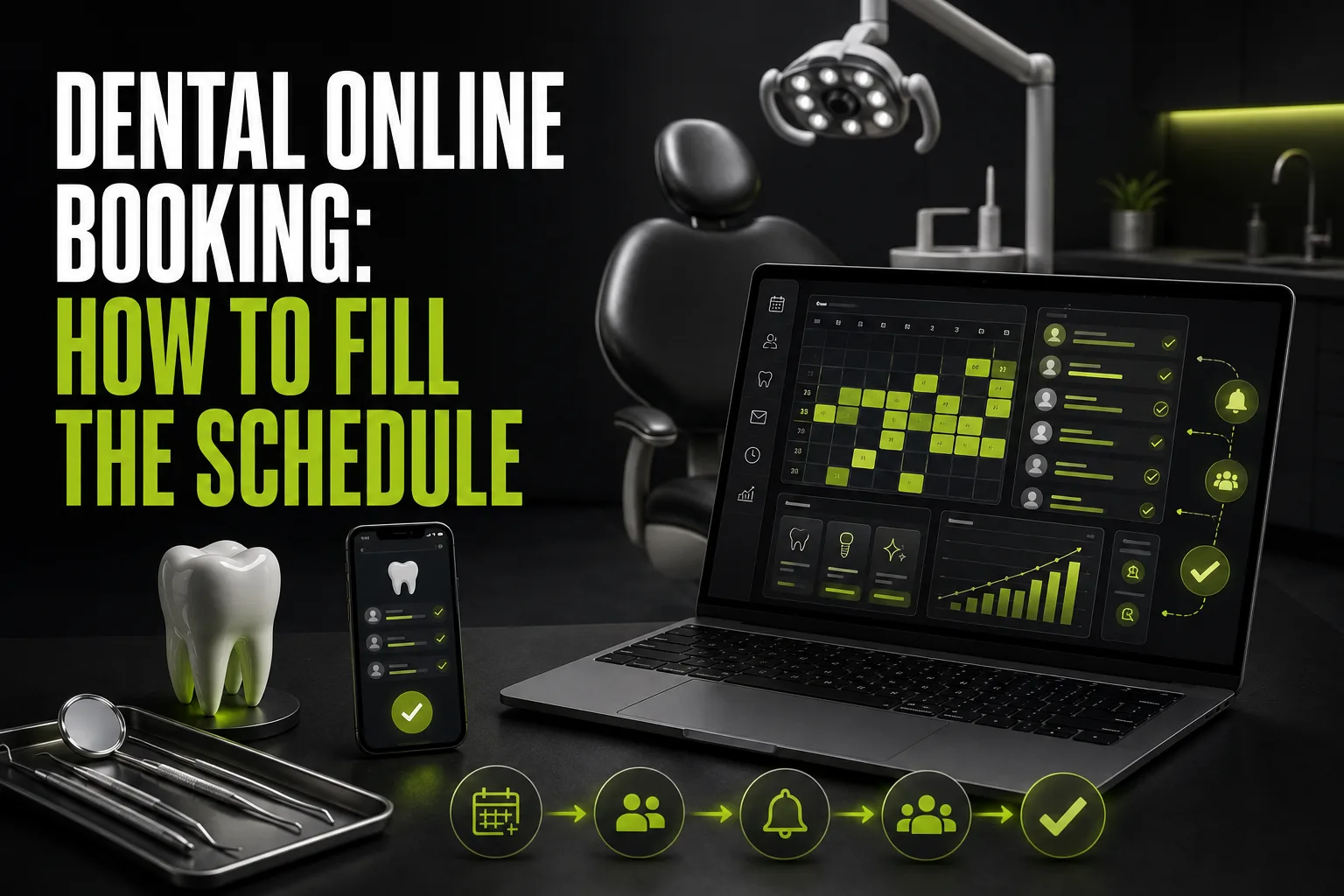
A patient looks for a dentist at ten in the evening when the pain starts, and on Saturday when there is finally time to deal with their teeth. That is exactly when reception is closed. So the main question for a clinic website is not "how does it look" but "can I book right now without calling". Here is how to build booking and doctor pages so they fill the schedule.
Most clinic websites have a callback form, and owners believe they have online booking. From the patient's point of view they do not: they left a number and know nothing — whether the time they want is free, which doctor they will see, when someone will call back. Half of such requests die, because by the time reception calls in the morning the person has booked where they saw an available slot.
Real booking shows the actual schedule. The patient picks a service, then a doctor, then a time from the available ones — and gets a confirmation immediately. The clinic loses nothing: the booking lands in the same software the receptionist already works in.
The main technical difference between dentistry and, say, a barbershop is that procedures have very different lengths. A consultation is 20 minutes, professional cleaning 40–60, root canal treatment up to two hours, implant placement has its own duration plus preparation. On top of that every doctor has their own schedule and their own specialities.
A booking widget from a site builder knows none of this: it offers identical half-hour slots. As a result the patient books a time the procedure does not fit into, reception calls back to reschedule — and the point of online booking is gone. That is why the booking system must carry the duration of every service and the schedule of the specific doctor.
A patient chooses not a clinic but a person they will trust with their mouth. If doctors on the site are a list of names with photos, there is nothing to choose from. What a profile needs:
Such pages also rank well: patients search for doctors by surname after a recommendation from friends, and the page should be what they find.
A twelve-page PDF price list does not get opened on a phone. The patient searches "how much does an implant cost" and wants to see a figure on the implant page — as a range, with an explanation of what it depends on: implant system, the need for bone grafting, crown type.
The right scheme is one price list in the admin panel that is automatically pulled into the general price table, the service pages and the booking flow. Change a price in one place and it updates everywhere.
We covered in detail why missing prices and unclear pages eat conversion in our article on why a site has traffic but no leads.
The patient fears pain, not price. Two pages are read the longest and lead to the most bookings: "How we manage pain" — types of anaesthesia, what it feels like, what happens afterwards; and "Your first visit" — what to bring, how long the examination takes, whether an X-ray is taken straight away, how it works with children.
These pages close no fewer objections than the price list, and almost none of your competitors bother to write them.
Patients almost always search with a location and a service attached: "dental implants Pechersk", "paediatric dentist Obolon", "braces price Lviv". A generic "Services" page does not rank for such queries — each direction needs its own page, ideally with the district mentioned in the copy.
The minimum set of pages for a clinic: implants, orthodontics, therapy and caries treatment, professional hygiene, prosthetics, paediatric dentistry, surgery. For a network you add branch pages with a map, opening hours and their own doctors — those collect queries containing the district name.
The other half of the job is the Google Business Profile. For dentistry the maps listing brings up to half of new patients, and the site has to reinforce it: the same name and address, a booking link from the listing, and a review request after the visit.
The clinic's main hidden loss is patients who book and do not turn up. The chair sits idle and the doctor loses an hour. Automatic SMS or Viber reminders a day and two hours before the visit noticeably reduce such cases, and the ability to reschedule with one tap does the rest: the person does not disappear silently but picks another time.
The second half of the same mechanic is a check-up reminder six months later. These are the cheapest patients you have, and most clinics simply do not collect them.
Healthcare on Google requires additional verification, and the site has to be ready for it in advance: licence in plain sight, real doctors with credentials, careful wording without "guaranteed cure" promises. Without that the ads simply will not run. We broke down advertising budgets in the article on how much Google Ads costs, and the basic promotion steps in how to reach the top of Google.
A clinic lives not on the first visit but on returns: hygiene twice a year, follow-up after treatment, the next implant stage. A patient account with visit history, a treatment plan and upcoming appointments turns a one-off visitor into a regular one.
Technically it is a simple thing: login by phone number, a list of past and upcoming visits, a "book again" button and the documents the clinic issued. The patient sees that they are remembered and does not look for a new clinic when the next check-up is due.
A dental website rests on three things: real online booking that knows the doctor's schedule and procedure durations, doctor pages with credentials and cases, and prices where people look for them. Add the pain-management and first-visit pages, switch on reminders — and the schedule starts filling itself without reception's involvement.
 Web development
 Web development
 Analytics and Conversion
 Web development
 Let’s create something amazing together
