We create digital solutions that work for businesses
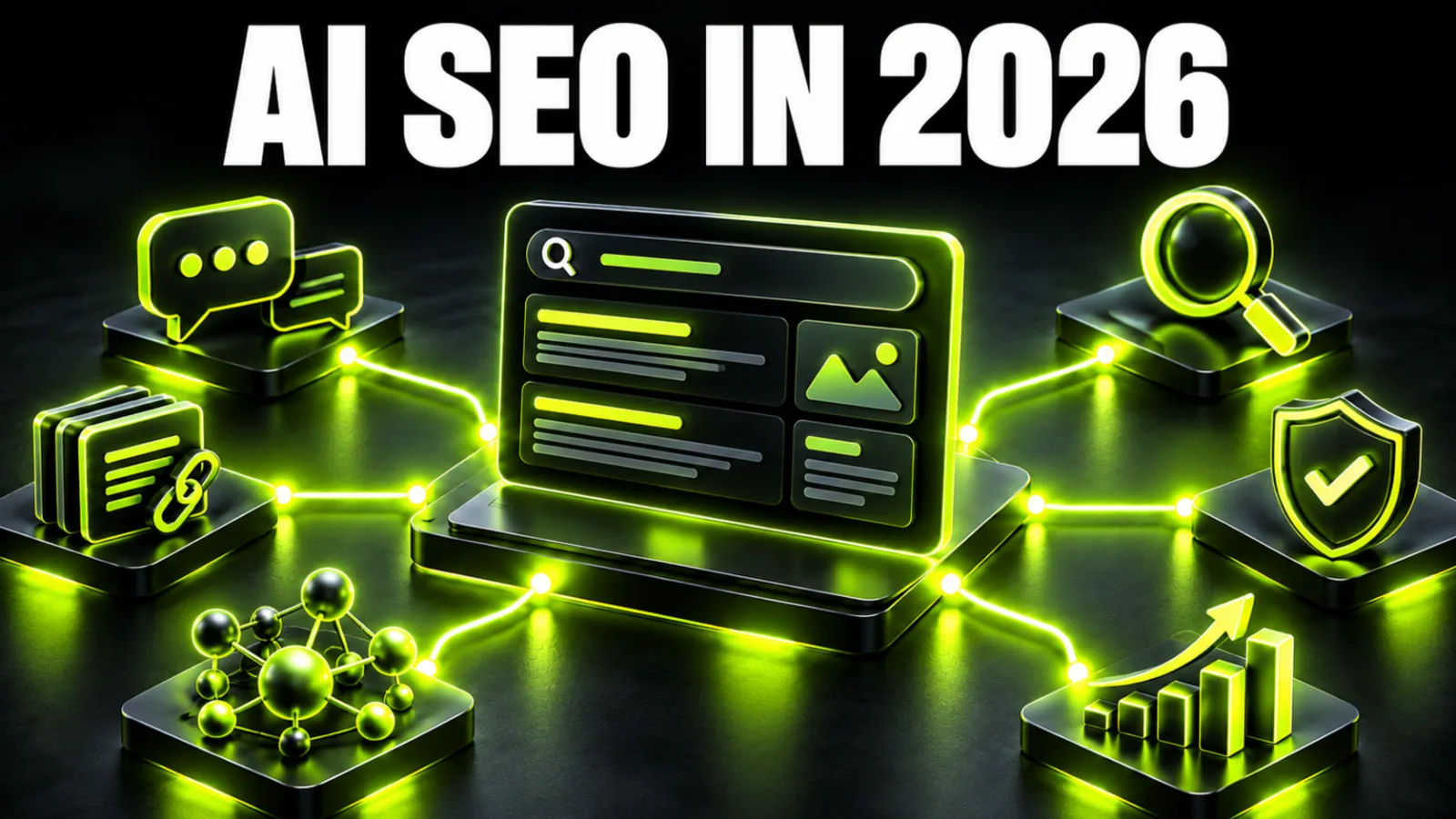
A buyer no longer has to start with a page of blue links. They can ask an assistant to compare website agencies, recommend a CRM for a small store or explain the realistic cost of SEO. The answer may mention only a few brands and cite a short list of sources.
Traditional search has not disappeared. AI discovery sits next to it, and strong pages often gain visibility in both channels. That is why AI SEO should start with a crawlable, indexable and useful website rather than a collection of new hacks.
Run the page through the AI readiness audit if you need a fast baseline. It can identify technical barriers. It cannot promise a citation because no tool controls the final source selection.
A site needs four things to earn visibility in ChatGPT, AI Overviews and Copilot:
There is no universal submission button for ChatGPT. There is also no special schema type that guarantees AI visibility. The work combines technical SEO, content, entities, reputation and analytics.
| Term | Main focus | Practical outcome |
|---|---|---|
| SEO | traditional search results | rankings, clicks and conversions |
| AEO | concise answers to questions | extracted answers and answer features |
| GEO | citations and mentions in generated responses | visibility in ChatGPT, AI Overviews and Copilot |
| AI SEO | a practical umbrella term | technical SEO, content, entities and AI measurement |
These disciplines overlap. Google states that its generative search features rely on core Search ranking and quality systems. Ahrefs research points in the same direction: pages that rank in Google are more likely to retain citations in AI Overviews and AI Mode.
For many sites, the correct starting point is still professional SEO: indexation, architecture, internal links, speed, content and domain authority.
An assistant does not browse the whole web from scratch for every answer. Depending on the product and query, it may use a search index, a dedicated crawler, a search partner or knowledge already available to the model.
A simplified retrieval process has four stages:
This is why a page can rank for a broad keyword yet never appear for a detailed conversational prompt. It covers the topic but does not resolve the specific job behind the question.
Check the following before rewriting content:
noindex or conflicting canonical blocks eligibility;OpenAI separates OAI-SearchBot, which supports search visibility, from GPTBot, which may collect content for model training. A publisher can allow one and block the other. Read the full distinction in the guide to robots.txt and AI crawlers and verify the live rules with the AI crawler checker.
If the URL is missing from the core index, diagnose why the page is not being indexed before trying to optimize it for generated answers.
People use detailed prompts:
Collect 30 to 50 questions from sales calls, email, support, Search Console and customer interviews. Label each one by intent: explanation, comparison, vendor selection, price or troubleshooting.
One URL should own one core intent. Do not publish five nearly identical pages for AI SEO, GEO, AEO, ChatGPT optimization and generative search optimization. These terms often express the same need and should support one authoritative resource.
Generic summaries are easy to replace. Give the reader information that does not exist in dozens of interchangeable articles:
Start each section with a direct answer, then add nuance and an example. This structure helps the reader scan quickly and gives retrieval systems a clear passage to understand.
Assistants can evaluate a company more confidently when independent sources use the same name, domain, service description, location and expert identities.
Audit the consistency of:
Do not manufacture hundreds of mentions. A small set of real cases, customer reviews and authoritative references is more useful than a network of empty profiles.
Schema.org can clarify the page type, author, company, product, address and breadcrumb trail. It does not provide an AI ranking switch.
Useful types often include Organization, LocalBusiness, Article, Product, Offer, BreadcrumbList, Person and a visible, honest FAQPage. Every JSON-LD value should match the content a visitor can see. The Schema.org guide explains implementation mistakes and eligibility limits.
Google says it does not use llms.txt for generative search ranking or inclusion. Other services may use similar files, but they do not replace indexation, crawlable HTML and useful content.
Questions should reflect real customer needs. Repeating the same phrase in twenty variations weakens the page.
Large volumes of pages without expertise, data or editing create duplication. Retrieval systems can choose stronger sources that say the same thing with evidence.
Answers vary by wording, search mode, region and date. One screenshot is not a visibility report.
Organic visibility remains closely connected to AI citations. Use the guide on getting to the top of Google to strengthen the shared foundation.
Clicks tell only part of the story. An assistant may mention a brand without a link, and the user may later search the name or visit directly.
Track four groups of metrics:
utm_source=chatgpt.com to referral URLs.| Metric | Question answered | Review cycle |
|---|---|---|
| prompt citation share | are your pages being retrieved | weekly |
| brand mention share | is your brand entering the shortlist | weekly |
| AI referral sessions | how many users clicked | monthly |
| AI conversions | does the channel create value | monthly |
| cited pages | which assets work | monthly |
Technical changes can become visible after recrawling. Content and authority work usually takes weeks or months. A new domain needs more time because search and AI systems have less history and fewer third-party confirmations.
A realistic first-quarter goal is to remove technical barriers, gain initial visibility for part of the target question set and establish reliable measurement. Fixed citation deadlines are not credible because generated answers remain volatile.
AI search adds a new decision layer between the customer and the website. Visibility comes from being easy to crawl, understand, verify and recommend.
Fix technical eligibility first. Then answer real customer questions with evidence no generic summary can replace. Measure citations, mentions and conversions together. For a scoped plan, review BB STUDIO pricing or send your site for an audit.
 SEO
 Analytics and Conversion
 SEO
 Analytics and Conversion
 Let’s create something amazing together

