
We create digital solutions that work for businesses
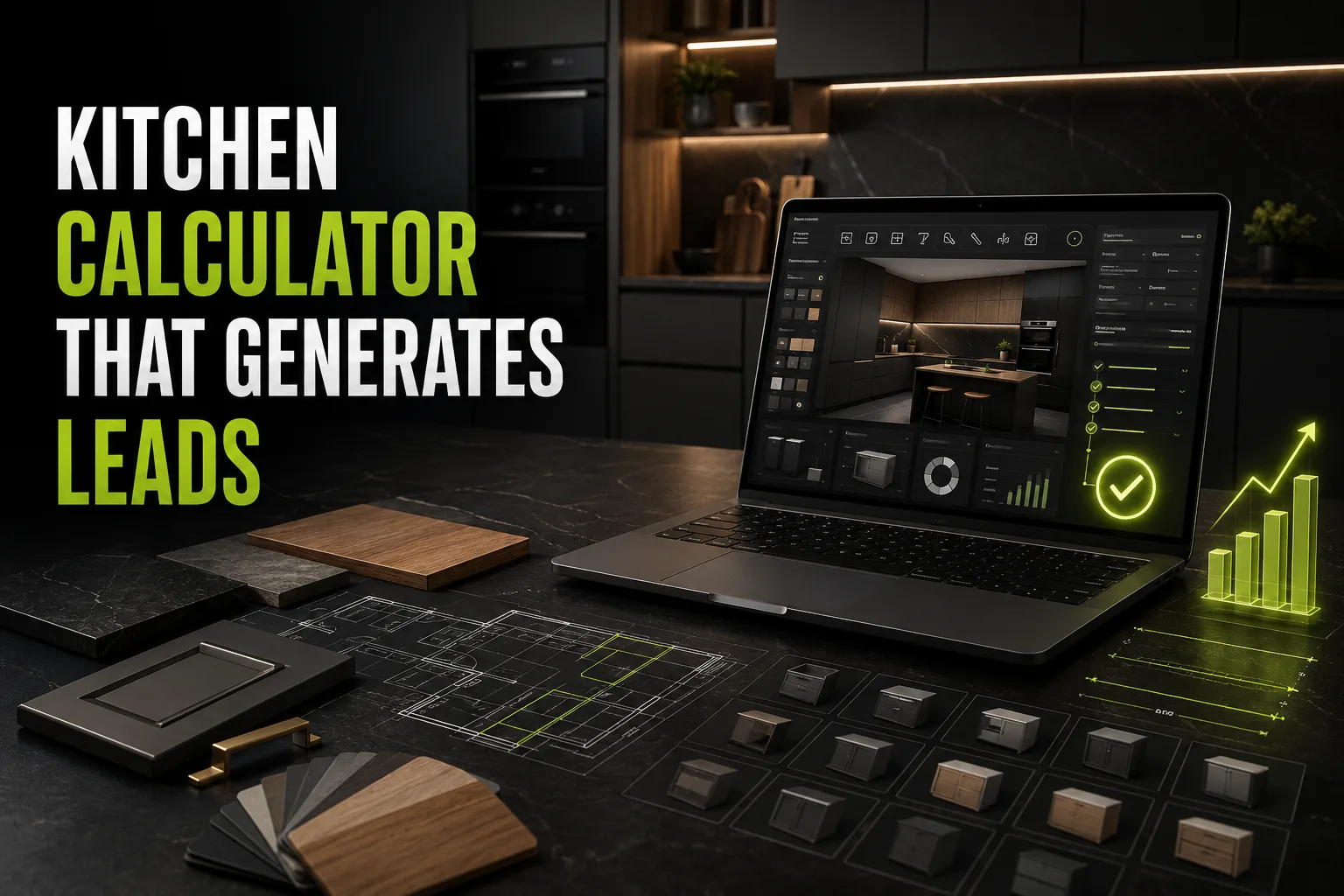
The most common objection from furniture workshops sounds like this: "everything is bespoke, we cannot name a price." That is true — and at the same time it is exactly what loses half the enquiries. A client compares four websites in one evening, and the one without a single figure simply drops out of the comparison. A kitchen price calculator solves this not by naming an exact sum but by giving a reference point and removing the fear of "they will quote me the moon".
Someone looking for a bespoke kitchen does not expect an exact figure before the measurement. They want to understand three things: is this within my budget at all, what drives the difference in price, and how long the wait is.
If the site does not answer those, the client draws their own conclusion — usually not in your favour. They either decide it is expensive and go to whoever wrote "kitchens from", or leave an enquiry in three places at once and then pick by who replied fastest.
A calculator turns that moment into something you control: you give a range, explain what it consists of, and receive an enquiry with parameters rather than a bare phone number.
The formula does not come from the internet but from how you already calculate. In most workshops that is linear metres of upper and lower units plus the worktop, hardware and appliances counted separately.
The minimum set of questions covering 90 percent of cases: length in linear metres or room dimensions; layout — single run, L-shaped, U-shaped, with an island; front grade — chipboard, painted MDF, veneer, solid wood; worktop — laminate, compact, quartz, acrylic; hardware — standard or premium; whether built-in appliances are needed.
The output is a "from — to" range with a short breakdown of what is included and a note that the exact sum is calculated after the measurement. Five or six steps maximum: every extra step reduces the number of people who reach the end.
The most common mistake is a calculator that demands a phone number before showing the result. The owner's logic is clear: "let them leave a contact." The client's logic differs: they feel someone is trying to catch them, and close the tab.
The working scheme is the reverse. Show the range immediately after the last step, and only beneath it offer to "send the estimate by email" or "book a free measurement". People who saw a figure they are comfortable with leave their contact far more willingly — and that is already a warm contact rather than a random one.
The same principle works in other niches with estimates — we wrote about it in construction company website: portfolio and estimator.
One specific sum in a calculator is a trap. The client will remember it as a promise, and after the measurement they will hear a different number — and perceive it as deception even when the difference is objective.
A range with an explanation works differently: "a 3.2 m kitchen in this configuration — from 78 to 96 thousand; the difference depends on fronts and worktop." The client sees a spread, understands what drives it and starts moving inside it themselves. It is also easier for the manager afterwards: the conversation is not about "why so expensive" but about which option to choose.
The calculator should hand over not just a phone number but all the parameters: length, layout, front grade, worktop, and the budget the person calculated for themselves. Then the manager calls prepared and starts not with "tell me what you want" but with "you calculated a 3.2-metre kitchen with MDF fronts — let me clarify a few details".
The second part is emailing the estimate as a PDF with your logo and a list of what is included. That gives two things: the client has something to show their partner, and your offer stays in front of them while they compare you with others.
And the third is an automatic reminder a few days later if the person did not reply. In furniture the decision cycle is long, and half the clients come back later rather than immediately.
A dedicated calculator page is a landing page worth advertising to. A click in the furniture niche is expensive, and sending it to the home page means paying for a person who will do nothing.
Advertising to a calculator produces a different result: within thirty seconds the person gets a figure, and the cost per enquiry comes out several times lower than from a "leave your number" form. The page also collects search queries like "bespoke kitchen price" and "how much does a 3-metre kitchen cost" that a general page will never receive.
On how to calculate the cost per lead and the return on investment overall, see how to calculate a website's return.
A configurator is a visual tool where the client assembles a kitchen from modules and sees the result. It looks impressive, costs noticeably more and requires standardised modules from your production.
Practical advice: start with a calculator. It closes the main task — giving a reference point and getting an enquiry — and is built within a normal website. A configurator makes sense when you have a large flow and typical solutions genuinely assembled from ready modules. Otherwise it becomes an expensive toy that clients spin once and close.
Too many steps. Twelve questions about hardware and lighting before the first figure — and only one in five reaches the end.
An unrealistically low range "to get them interested". A twofold difference after the measurement kills trust for good, and the person will tell their friends about it too.
A result with no explanation. A bare number without a list of what is included does not persuade: the client cannot tell whether they are comparing like with like.
A calculator that does not load on a phone. Furniture gets browsed in the evening from the sofa, and if it lags, nobody will use it.
And the last one: the calculator exists but the enquiries go nowhere except the manager's inbox, where they get lost. Estimates have to land in a CRM with their parameters.
A calculator with your formula is included in furniture workshop website development: from ₴19,900 and 2–4 weeks together with the portfolio, material pages and measurement booking. A separate landing page for one furniture type with a simple calculator starts from ₴9,900 and seven days.
The complexity depends not on design but on logic: how many parameters, whether layouts carry different coefficients, whether appliances are counted separately. So bring to the briefing how you calculate today — as a spreadsheet or simply in words.
What else a workshop website includes is collected on the page about custom furniture website development.
On its own a kitchen price calculator gives a figure, but the client decides when they see what stands behind it. Three things should sit alongside.
A portfolio with prices under each project: "this 3.4 m kitchen cost this much, these fronts, this timeline". That is the strongest confirmation that your range is real. Then a "How we work" page with the sequence: measurement, design, contract, production, installation, warranty, with timelines for each stage. And measurement booking with a calendar so the person picks a convenient day immediately instead of waiting for a call.
Without that set the calculator remains a standalone toy: the figure was seen but no trust was built. We wrote more about what to show in a portfolio in getting construction leads from Google Maps — the mechanics of proof in furniture and construction are very similar.
A kitchen price calculator is needed not for an exact sum but so the client grasps the price bracket and does not leave for whoever named it. The formula comes from your own practice, there are no more than six steps, the figure appears before the phone number is requested, the result is a range with an explanation, and it lands in the CRM with its parameters. Leave the configurator for later: start with the calculator, because it is what brings the enquiries.
 Analytics and Conversion
 Analytics and Conversion
 Design & UI/UX
 Web development
 Let’s create something amazing together
