We create digital solutions that work for businesses
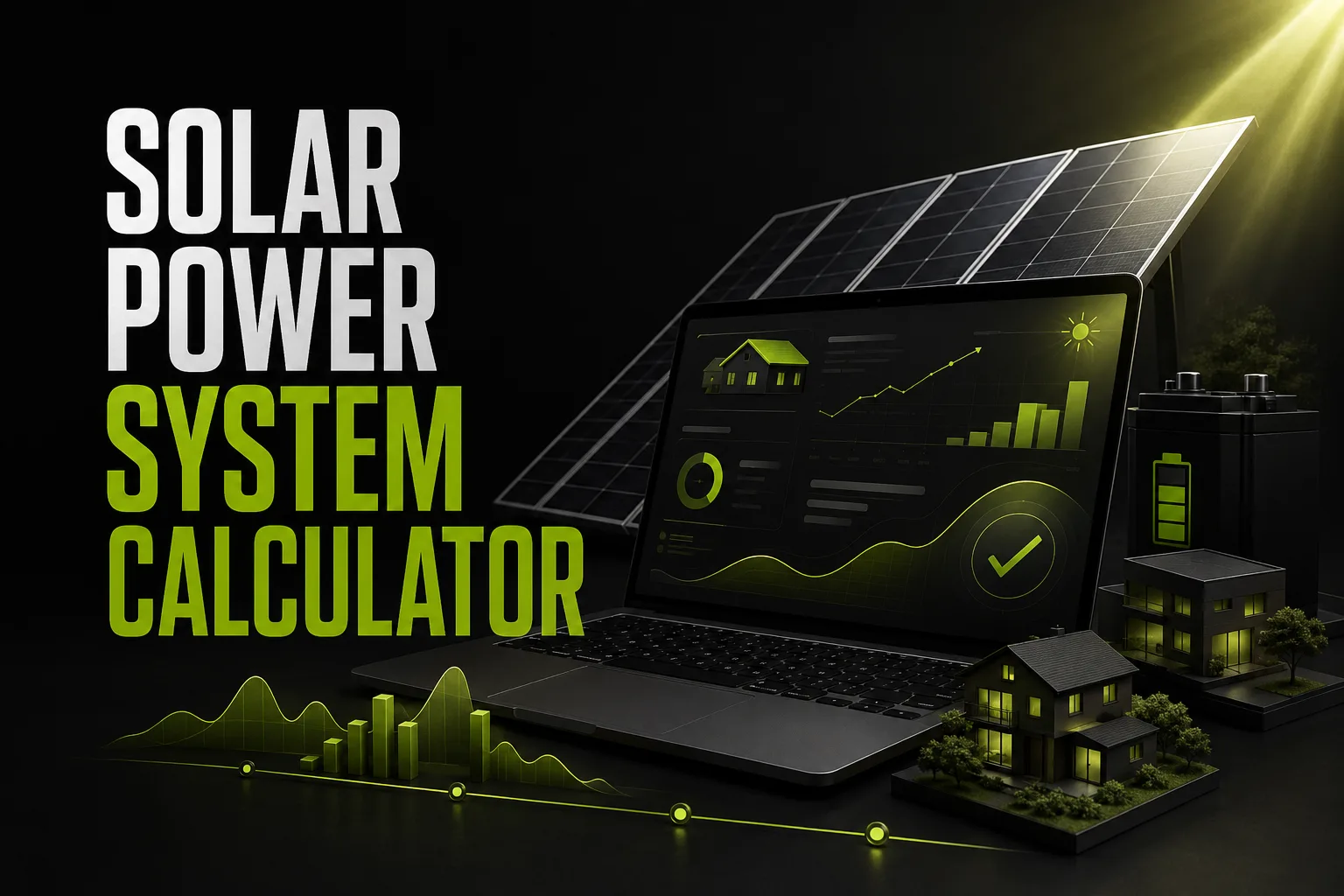
An energy company's client arrives with a problem, not a technical brief. They know the power gets cut or the electricity bill has become indecent, and they want someone to work it out: which system they need, what it costs, when it pays back. Whoever calculates first gets the sale. So a solar calculator on the website is not an extra feature but the main sales tool in this niche.
Picture someone looking into a solar system for the first time. They open five websites and see catalogs of panels with wattages, inverters with model names and the phrase "we will calculate individually". None of those sites answered their question, because they do not know how many kilowatts they need.
What follows is simple: they leave an enquiry wherever something was actually calculated, even if it costs more there. A calculation gives a sense of control and competence — exactly what a person lacks in an unfamiliar subject.
So the site's main job in this niche is not to display equipment but to translate specifications into the client's language: "this is enough for the boiler, the fridge and the router for eight hours".
The confusion starts here. Clients actually need two different calculators, and they answer different questions.
A capacity calculator is for someone who wants backup during outages. It counts not money but kilowatts: how much is needed to keep running what cannot be switched off, and for how many hours it will last.
A payback calculator is for someone who wants to save money or sell the surplus. It answers "how soon does the investment return" and calculates from the tariff, consumption and regional generation.
In practice the site needs both, with a fork on the first screen: "I want backup during outages" or "I want to cut my bills". Then the person follows their branch and does not read the irrelevant half.
The clearest format for a client is a list of appliances with checkboxes rather than a field saying "enter kW". The person ticks: fridge, boiler, pump, lighting, router, air conditioner, and states how many hours it has to last.
The calculator sums the consumption, adds headroom for the starting current of pumps and compressors, and shows: the required inverter power, battery capacity, a recommended kit and a price range.
The key is translating back into plain language. Not "5 kW / 10 kWh" but "enough for the boiler, fridge, lights and router for roughly 10 hours". The technical figures stay alongside for those who understand them.
The temptation to show a pretty figure is strongest here, and here it costs the most. A promise of "payback in three years" for everyone alike is something the client will check with a neighbour and remember forever.
An honest calculation accounts for: system capacity, the region and its average generation, the client's tariff, the share of self-consumption, the cost of the kit including installation. And it shows the result as a range — "roughly 5–7 years" — with an explanation of what drives the spread.
It is worth stating separately what changes the picture: rising tariffs speed up payback, while seasonality makes winter generation several times lower than summer. A client who was told this in advance does not come back a year later with a complaint.
The most common calculator mistake in this niche is demanding a contact before showing the result. The "let them leave a number" logic is understandable, but the person senses a trap and closes the page.
The working scheme is different: show the kit and the range immediately, and beneath the result offer to email the full calculation or call out an engineer. Those who saw an acceptable figure leave their contact far more willingly, and that is already a prepared client.
We covered the same principle using furniture as the example in a kitchen price calculator on your site — the mechanics are identical in any niche with individual pricing.
The calculator should hand the manager not a phone number but the whole context: which appliances were ticked, for how many hours, which kit was calculated, what range came out, which region. Then the first call starts not with "tell me what you need" but with clarifying details.
The second element is a PDF of the calculation emailed to the client: the kit, capacity, approximate cost, payback, your logo and contact. People keep such files and compare offers offline, often with family.
And the third is a reminder a few days later if the person did not reply. The decision cycle in energy is long: a month often passes between the first calculation and a contract.
The calculator makes a promise; cases confirm it. Without them any figure remains words, because everyone in the niche promises the same.
A working case format: the site and region, system capacity, equipment, cost, how much it generated in a year, how fast it paid back or will, and a short quote from the owner. If your monitoring system exposes data, a live generation chart inside a case is the strongest proof you can possibly show.
Ten such cases convince more than a hundred photos of roofs with panels. We covered similar proof logic in furniture portfolio: what to shoot — different niches, identical principle: figures instead of pretty pictures.
Clicks in this niche are expensive and get pricier during outage season. Sending them to the home page means paying for a person who will do nothing. Ads should lead to the calculator or to a ready kit page with a price.
The second feature of the niche is spikes. On the first day of scheduled outages traffic multiplies within hours, and the site has to withstand it: caching, compressed images, no heavy plugins. We will write separately about preparing a site for peak days; what the energy company site itself includes is on the page about solar and generator company website development.
How to calculate the cost per enquiry and the site's return overall is described in how to calculate a website's return.
A calculator answers those willing to answer questions. But some people want something simpler: to look at ready options and pick the one closest to their situation. So kits should sit alongside.
The working format is three or four segments: flat, private house, small business, industrial. Each with two or three kits listing the equipment, capacity, a price range, installation time and a short "what it powers" line. The client opens their segment and immediately sees the order of magnitude without filling in the calculator at all.
The second thing worth its own block is instalments and support programmes. The total price frightens people even when payback is obvious; a monthly payment frightens them far less. A payment calculator next to a kit removes that barrier better than any text about benefits.
A solar calculator is needed because the client does not know what they need and buys where someone did the maths. Separate capacity from payback, translate kilowatts into understandable things, show the range before asking for a phone number, email the calculation as a PDF and back it with cases carrying real generation figures. Ads lead to the calculator rather than the home page — and that is where the enquiry is formed.
 Analytics and Conversion
 Analytics and Conversion
 E-commerce
 Artificial Intelligence
 Let’s create something amazing together
