We create digital solutions that work for businesses
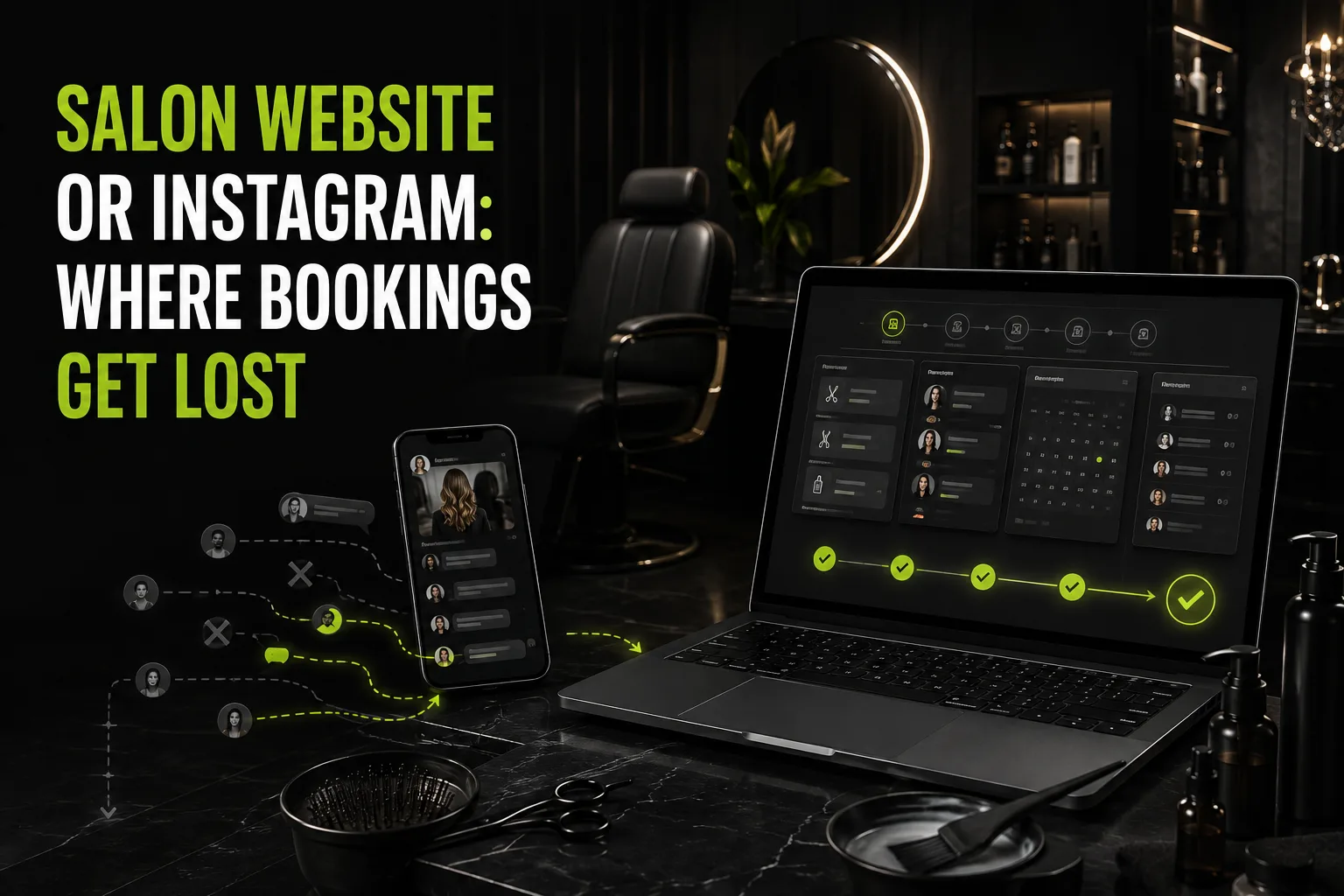
A beauty salon website was long considered optional: there is Instagram with the work, there is a receptionist with a phone, clients somehow show up. But "somehow" is exactly the problem. Instagram shows the specialist, while the booking is handled by a phone that stops answering at seven in the evening. Between those two points most of the people who were already willing to come get lost. Let us look at where bookings disappear and what a website does about it.
The first is evenings and weekends. People decide to book when they have a spare minute: at ten at night after work or on a Sunday. Reception does not answer, and by morning the impulse has passed or the client has booked somewhere else.
The second is price. A question like "how much is complex colouring on long hair" hangs in direct messages for an hour. In that hour the person finds three salons where the price is written down and chooses among them.
The third is choosing a specialist. In a feed the work is mixed together: nails, brows, colouring, all specialists at once. A client sees a haircut she likes but cannot tell who did it or whether they have a free slot.
A website closes all three: it works around the clock, shows prices in a table and lets people book with the specific specialist whose work they just looked at.
Instagram is an excellent shop window and a poor entry point. There are several reasons, all practical.
Profiles are not found in search. When someone looks for "manicure near me" or "barbershop by the metro", Google shows websites and map listings, not feeds. That is cold traffic which simply does not exist in direct messages.
A price list in stories lives for a day. Prices have to be repeated manually every time, and a new client never sees them at all.
The algorithm does not show you to every follower. You do not control reach, and one weak week drops the flow.
The profile does not belong to you. A block or a hack and you lose the base you built for years.
The right combination looks like this: social media shows the work and leads to the site, the site takes the booking and builds the database. The link in the profile header should lead not to the home page but straight to booking with a specialist.
A salon website is not a three-screen business card. It is a working tool where every block closes a specific client action.
The main and the hardest part. A manicure is 90 minutes, a men's haircut 45, complex colouring up to four hours. Booking must show only the windows the chosen service actually fits into with that particular specialist. Otherwise reception calls back to reschedule and the point disappears.
By area, with price, duration and specialist level, searchable. Change a price in the admin panel and it updates in booking and on the service pages too.
Photo, specialisation, experience, certificates and twenty to fifty works by that specific person rather than a general salon gallery. The client picks a human being — and comes back to them.
Before holidays this is a separate revenue channel that currently lives entirely in direct messages and is therefore lost. Purchase in two minutes with delivery to the recipient.
This is what Instagram cannot provide in principle. People search for a salon by district and service: "manicure Obolon", "barbershop Pechersk", "cosmetologist near the metro". To appear for such queries you need separate pages per direction with the address and district in the copy, not one "Services" page as a list.
The other half is the Google Maps listing. For a salon it brings up to half of new clients: people search "manicure near me" and choose among three listings by rating and photos of work. The site has to reinforce the listing: the same name and address, a booking link, and a review request after the visit.
We covered the general promotion steps in how to reach the top of Google. If traffic is already there but bookings are not, the reasons are collected in why a site has traffic but no leads.
Nine out of ten salon clients arrive from a phone, often on mobile data and often in a hurry. A site that takes four seconds to load loses them before they see the price list. That is why we do not use heavy templates with a dozen plugins: custom code, compressed photos, 90+ mobile PageSpeed.
In practice that means the first screen with a booking button, address and opening hours is visible immediately, without scrolling. The price list opens with one tap. Booking takes three steps and a confirmation.
A landing page for a specialist or a barbershop starts from ₴9,900 and seven days: services with prices, specialists, work, embedded booking, a map. A salon website starts from ₴19,900 and 2–3 weeks: pages per direction, specialist profiles, booking by specialist and duration, an Instagram gallery, offers, certificates, an SEO structure for the district. A chain or a clinic with training starts from four weeks and is quoted individually.
To estimate the return before you start, see how to calculate a website's return. For a salon the maths is simple: if the site brings a few new clients a week, it pays for itself within the first or second month.
What exactly the work includes and how it all looks is collected on the page about beauty salon website development.
A salon lives not on the first visit but on returns: a manicure every three weeks, brow correction monthly, root colouring every six weeks. This is exactly where a beauty salon website gives you what no social network can — your own database with history.
The mechanics are simple: after a visit the client enters the database, and after the appropriate interval receives a Viber or SMS reminder with a "book with the same specialist" button. These are the cheapest clients you have: they already know the prices, know the way and trust the specialist. Most salons never collect this channel at all, although it requires neither advertising nor budget.
The second part is a loyalty programme. Bonuses for visits and for referring a friend, visible in the client's account. It is cheaper than plastic cards, works from a phone and gives a reason to come back to you rather than to the salon that just opened closer to home.
Before building a new site we go through the salons in your area. The mistakes repeat almost everywhere, and every one of them directly costs bookings.
"Ask reception for prices" — a client compares three salons from her phone and books where the price is written. Phone-only booking — half the people decide to book in the evening when nobody answers. Specialists without photos of their work, just "a team of professionals" — nobody to choose from. Opening hours and address hidden in the footer, which nobody scrolls to on a phone. And the classic: a "-20% until 8 March" offer still up in May — after which the client understands nobody maintains the site and projects that onto the salon itself.
A salon loses bookings in the evenings, on price questions and on the choice of specialist. Instagram closes none of those, because profiles are not found in search, a price list in stories lives a day, and the profile is not yours. A beauty salon website works around the clock, shows prices in a table, lets people book a specific specialist and collects cold traffic from local queries and maps — that is, it does exactly what social media cannot.
 Web development
 Analytics and Conversion
 Analytics and Conversion
 Web development
 Let’s create something amazing together
