
We create digital solutions that work for businesses
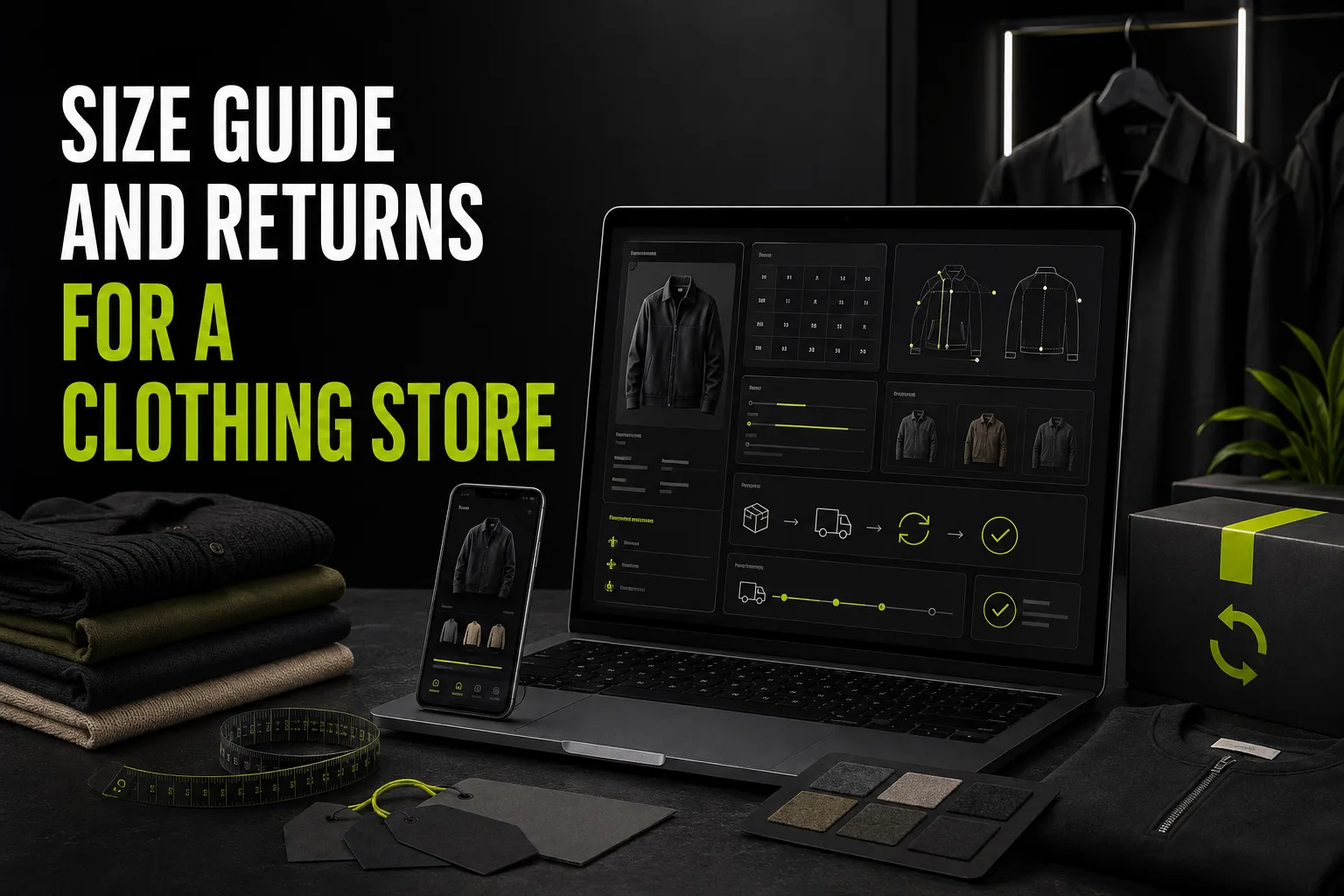
In fashion two numbers decide a store's profit, and neither is about traffic. The first is how many shoppers abandon the cart because they could not work out the size. The second is how many orders come back because the item did not fit. Both depend directly on how the size chart and the returns page are built. Here is how to get them right.
Site builders and templates give you one size table for the entire site: S, M, L and centimetres. In reality patterns differ between brands, kids' clothing is sized by height, and in knitwear the same label stretches differently depending on the fabric.
The shopper sees "M", cannot tell whether it is their M, and does one of two things: leaves, or orders two sizes "to try" and returns one of them. The first eats conversion, the second eats margin on shipping.
The working approach is a chart attached not to the store but to a brand or a category. The product page shows the table that applies to this specific item, ideally with two columns — the nominal size and the actual garment measurements.
This is the most important detail most stores skip. Tables come in two kinds: body measurements ("chest 88–92 cm") and garment measurements ("chest width laid flat 52 cm"). The second is more precise, because the shopper can take a favourite T-shirt, lay it on a table and measure it.
Ideally you show both: body measurements for those who know their parameters, and garment measurements for those who navigate by clothes they already wear. Plus a short hint on how to measure — two sentences, not a page-long manual.
We covered the structure of the product page itself in our article on the product page that sells.
In fashion 15 to 30 percent of orders come back. That is a normal industry figure, not a sign of a bad product. The problem is not the return itself but how it is presented. When the terms are buried in small print in the footer, the shopper suspects a catch and does not order at all.
What has to be in plain sight: the return window, who pays for return shipping, what condition the item is accepted in, how many days the refund takes and how to submit a request. The last one is a proper form on the site, not "DM us".
The paradox is that transparent return terms increase sales. The shopper risks less and therefore orders more boldly — including one size of an item instead of two.
Processing returns by hand eats a manager's hours. The working scheme: the customer opens their account or the order by number, picks the item, selects a reason from a list and receives instructions with a shipment number. The manager sees the request in the admin panel with a status.
Reasons from a list are also free analytics. After two months you know exactly which items come back most and why: "too small" on a specific model means the chart for it is shifted and needs fixing.
Put returns into a simple table: item, size, reason. A few typical conclusions become visible immediately:
Each of these is fixed in half an hour in the admin panel — and reduces shipping costs every month.
For all of the above to be more than theory, the store needs three things. First, charts as a separate entity: you create a table once and attach it to a brand or category instead of copying it into every product. Second, product variants instead of separate cards per size — otherwise duplicates appear in search and stock is counted incorrectly. Third, stock tracked per size and synced with your accounting system or at least a spreadsheet.
We build all of this into a clothing store by default — the details are on the page about clothing e-commerce development.
If the store is already built properly — meaning sizes are product variants rather than separate cards — charts and a returns form are added within a few days as part of support. If the catalog has to be rebuilt, that is separate work: first we merge items into variants, connect stock tracking per size, and only then attach the charts.
In a new store all of this is built in from the start and costs nothing extra. General budget benchmarks for an online store are in our article on how much an online store costs.
A brand-level size chart with garment measurements, model height and a fit label on the product page, transparent return terms in plain sight and a form instead of an email thread — four changes that lift conversion and cut return shipping costs at the same time. Collect return reasons as a list: within two months they will show you exactly what to fix.
 E-commerce
 E-commerce
 E-commerce
 E-commerce
 Let’s create something amazing together
